



Jonas Winslo
Recruit
- Joined
- Aug 8, 2012
- Messages
- 3
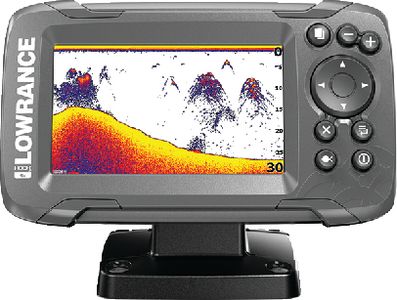
i've been putting together info from a variety of sources. some info comes from sonar. i don't have a good one, so that pretty much just tells me depth (when it works). otherwise i've been studying historical satellite images (e.g., use google earth, then go back through historical satellite images until you find low lake conditions) to find rocks and structure that you can't normally see. i then drop waypoints in google earth and export them to my handheld GPS. a lot of info comes from other fishermen with better electronics, from locals (e.g., who told me where the road bed was). and honestly some comes from just throwing that deep crank all day. i use it to help me locate exactly where a dropoff is, and it's pretty obvious when the crank hits rocks. i had to stop fishing multiple times to go bang a lure retriever on my crank to get it back. one time i actually pulled up the crank with a burlap covered sandbag, which confirmed my suspicion that i was pulling the lure over an old temporary dam. i'm newly impressed with tournament bass fishermen who can fish an otherwise unknown body of water and know how to find these kind of spots quickly.
i have been fishing some of these lakes & spots literally for years. obviously you really get to learn a body of water very well when you invest that kind of time. BUT that familiarity also potentially makes you blind to new spots, i.e., you have your known spots where you've caught fish before and a limited amt of time to fish, so you tend to fish the same spots. the satellite images have really helped me study a body of water from a fresh perspective.
i'm also trying to extrapolate from known spots where i've caught fish, i.e., i'm looking for rocks within reach of my crank (ca. 10-15ft deep) -- and the closer to deep water, the better. so then i return to the satellite images looking for those conditions.
i fished for 10 hours on saturday, and most of the spots only yielded small fish. only one spot produced big fish, and even then all the big fish i caught/hung (caught 2, lost 1) came within a short amt of time. i assumed the big fish were stacked up in this spot, and i was able to drag out 3 (lost 1 at boat) before the rest spooked (or lost interest, moved, whatever).
i do like to hit my favorite spots, just like everyone else. BUT when i'm not catching fish, then i really start trying out these new spots/area i've discovered. so saturday i had fished 9hrs hitting mostly favorite spots, with only a few dinks to show for the effort. so then i started working thru my GPS waypoints of new areas, and i got lucky and found some fish stacked up in one spot. the time of day helped, too (4pm), as the transition to early evening may have encouraged the fish to feed.
i have been fishing some of these lakes & spots literally for years. obviously you really get to learn a body of water very well when you invest that kind of time. BUT that familiarity also potentially makes you blind to new spots, i.e., you have your known spots where you've caught fish before and a limited amt of time to fish, so you tend to fish the same spots. the satellite images have really helped me study a body of water from a fresh perspective.
i'm also trying to extrapolate from known spots where i've caught fish, i.e., i'm looking for rocks within reach of my crank (ca. 10-15ft deep) -- and the closer to deep water, the better. so then i return to the satellite images looking for those conditions.
i fished for 10 hours on saturday, and most of the spots only yielded small fish. only one spot produced big fish, and even then all the big fish i caught/hung (caught 2, lost 1) came within a short amt of time. i assumed the big fish were stacked up in this spot, and i was able to drag out 3 (lost 1 at boat) before the rest spooked (or lost interest, moved, whatever).
i do like to hit my favorite spots, just like everyone else. BUT when i'm not catching fish, then i really start trying out these new spots/area i've discovered. so saturday i had fished 9hrs hitting mostly favorite spots, with only a few dinks to show for the effort. so then i started working thru my GPS waypoints of new areas, and i got lucky and found some fish stacked up in one spot. the time of day helped, too (4pm), as the transition to early evening may have encouraged the fish to feed.


