





splicing new wires into original wiring harness

dccordell

Chief Petty Officer
Joined
Apr 28, 2010
Messages
415
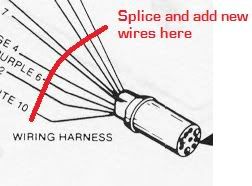
Hey guys, my rebuild is getting close to the time to run some wires (finally!).. I'm working on a boat that is from 1978-1980 (not sure yet) so the wiring is obviously in rough shape. What I want to do is have all fresh wiring in the boat on both the house and the engine side. The house side is no problem, but what I'm wanting to do for the engine side is take the wires where they come out of the wiring harness hookup on the motor (the big round plug with the clamp) and leave about 8-10inches and cut the rest, then take new wires of the same awg and splice them in with polyolephin butt connectors to the original wires so I can have a fresh pieces of wire running to the console. Does that make any sense? I'm wondering if this idea is ok, or should I be doing this a different way? Even if I could find a brand new wiring harness for this old motor, it's $$, and I believe I can do it just as well myself.

The only thing I'm concerned about is that the new wires obviously won't be of the original color codes. To remedy this, I thought about getting a label maker and either use the colored labels that match the original color of the wire, or just write the color(s) on the labels so it will be easier to follow the factory wiring diagrams in the future or if I ever sell the boat.. and put the label on both ends of the wire (at the motor and under the console).
harnessSplice.jpg


I have tinned marine wire (600ft., greatLakesSkipper), heat-shrink adhesive terminals..

How's that sound? Any advice, ideas, anything??

Thanks! :)
 

bruceb58

Supreme Mariner
Joined
Mar 5, 2006
Messages
30,751
Re: splicing new wires into original wiring harness

Make sure you use a quality crimper.
 

fishrdan

Admiral
Joined
Jan 25, 2008
Messages
6,989
Re: splicing new wires into original wiring harness

I have tinned marine wire (600ft., greatLakesSkipper), heat-shrink adhesive terminals..

What gauge is that wire? The engine harness has wire from #10 to #16 (?) and you want to follow what's there. Spend the extra $$$ and get the correct colored wire, in the proper gauge. Anything you use to mark the wires can fall/wear off over time and then you are stuck with a bunch of unmarked wires. Look at genuinedealz.com as they have pretty good prices on marine wiring in different colors and gauges.

(...Not that I'm suggesting it...) Something I have done in the past to differentiate wire runs of the same colored wire is to use colored heat shrink tubing. Cut up 1/2" pieces of white, red or black (etc.) and shrink it onto the wire every 4-6". It's not the best, but at least you will have a permanent mark on the wire and can tell it apart from other wires of the same color. I've only done this for accessories, not sure I would do it on something as important as the engine harness...

New wiring harnesses are available, even on Ebay, complete with the cannon plug molded onto the wires, much better than trying to splice onto the old cannon plug. Be aware, There are different pin-outs for the cannon plugs, different number of pins depending on the vintage of the cable. Older cables used less pins/wires and you need to find one that matches the receptacle on the engine (and plug a the helm if used).

If you splice onto the old cannon plug, stagger the crimp connectors so they are not all at the same place on the harness. Space the crimps about every 2", this will help support the individual crimps so they are not pulling/pushing on each other and make the splice less bulky. Also, make all the splices in an area of the harness where it's running straight, don't make crimps on a bend, if possible.
 

Silvertip

Supreme Mariner
Joined
Sep 22, 2003
Messages
28,771
Re: splicing new wires into original wiring harness

Don't cut all the wires at the same spot. What happens is you will end up with a great big ball where all the splices are. Stagger them about the length of a butt splice length from each other. Otherwise, PM me. I may have a solution for you that is far less work.
 

Mark42

Fleet Admiral
Joined
Oct 8, 2003
Messages
9,334
Re: splicing new wires into original wiring harness

Don't use the same color wire for all circuits and rely on labels to identify the circuits. Buy different color wire. There are a few wire suppliers that popular with members here. I like gregsmarinewiresupply.com because colored wire is available is small spools of 50ft at bulk wire price. (50ft of 16ga is $5.30) The savings by using one color is just not worth the headaches it will give you later.

Also check the plug to be sure the 'connectors' don't come out (many do). Then new ones can be added to the end of new wire and inserted back into the plug without the use of splices.

Plastic wire loom is a nice addition to any wire job, and helps keep your new harness organized, neat, and easy to work on when adding a new circuit.

BTW, when attaching the wire loom to the boat, I found that PVC pipe hanger works great. Been using it for years, its tough, won't rot or rust, has holes pre-punched, and is easy to work with. Get it at Depot or Lowes, etc. Its also great for hanging fuel line, throttle/shift cables, and anything else that needs to be threaded through the boat. Here it is holding the control cables to the back side of the boats side panel.

9931.jpg
 

dccordell

Chief Petty Officer
Joined
Apr 28, 2010
Messages
415
Re: splicing new wires into original wiring harness

I read that this crimper is a good one for a decent price from this site. I'll probably give it a shot if there are no objections or better options.

The gauge of the wire does vary so I'll be using the same gauge as the original wires. GenuineDealz has some great prices.. I ended up finding the wire at a better price at GreatLakesSkipper though... I got a few terminals from genuineDealz though that I couldn't find locally, and their 10awg duplex was cheaper than greatLakesSkipper.

The thing about using the different wire colors is that even though I can get a few different colors, I couldn't find anywhere to get wire that matches all of the colors that have two colors on one wire (purple w/black stripe, etc..).
Still not sure of the labeling yet... I read some people use just a piece of paper wrapped around the wires with the label on it, then put clear heat-shrink tubing over that. I haven't been able to find clear heat-shrink locally though. Even if I use several colors, I want to label the wires somehow.

I'll have to look at the plug closer to see if the pins are able to come out like Mark mentioned. If they do come out that would be great.. no splices then.

I have looked on ebay for the harness, but seems like none of them match the part number that I got for the harness from mercruiserparts.com. The ones that are listed for the 3.7 are all used so who knows if they are really any better shape than mine. mercruiserparts.com says the part is NLA. No surprise..

If I did end up splicing the wires, do most people put a piece of heat-shrink tubing over the butt connector after it is crimped and sealed? Good ideas on not doing all of the spliced in one spot.. that's something that I would have thought about *after* I cut the wires. I like the pipe hanger idea too... looks nice and neat. Thanks for the tips..

Trying to do this the best way.. I don't want it to look like something somebody "rigged" up just to get by.

Thanks again for the hints/tips/suggestions..
 

bruceb58

Supreme Mariner
Joined
Mar 5, 2006
Messages
30,751
Re: splicing new wires into original wiring harness

If I did end up splicing the wires, do most people put a piece of heat-shrink tubing over the butt connector after it is crimped and sealed?
If you use the Ancor brand crimp connectors with the built in adhesive there is no need to add shrink sleve tubing.
 

dccordell

Chief Petty Officer
Joined
Apr 28, 2010
Messages
415
Re: splicing new wires into original wiring harness

If you use the Ancor brand crimp connectors with the built in adhesive there is no need to add shrink sleve tubing.

Ok.. makes sense, just making sure.
 

99yam40

Fleet Admiral
Joined
Sep 7, 2008
Messages
9,211
Re: splicing new wires into original wiring harness

I have found the connectors(rubber plugs) on some older motors deteriate to the point that they would start tracking from one wire connector to the others and to ground on the motor. drove me crazy trying to troubleshoot a wiring problem.
I would make sure they were in good shape and use a megger to make sure before reusing them on your motor.
 

dccordell

Chief Petty Officer
Joined
Apr 28, 2010
Messages
415
Re: splicing new wires into original wiring harness

I have found the connectors(rubber plugs) on some older motors deteriate

I'll check mine to see what shape it's in.. won't be back at the boat till Monday, so I'll know more then.
 

99yam40

Fleet Admiral
Joined
Sep 7, 2008
Messages
9,211
Re: splicing new wires into original wiring harness

It is a meg-ohm meter. 1 Megohm =1000000 ohms
meter used to test high resistance leakage on electrical conductors/devices
 

bruceb58

Supreme Mariner
Joined
Mar 5, 2006
Messages
30,751
Re: splicing new wires into original wiring harness

It is a meg-ohm meter. 1 Megohm =1000000 ohms
meter used to test high resistance leakage on electrical conductors/devices
I can pretty much guarantee that you don't need to worry about mega ohm resistance leakages in a 12 volt system.
 

sasto

Captain
Joined
Jun 1, 2010
Messages
3,918
Re: splicing new wires into original wiring harness

If she were mine I would mount a buss bar in a watertight box or tupperware and mount the box close to the engine. I would make my connections in the box. The box with the connections would serve as a troubleshooting point. You can also secure a drawing to the lid for future reference....along with the labeled wires. Good Luck!
 

fishrdan

Admiral
Joined
Jan 25, 2008
Messages
6,989
Re: splicing new wires into original wiring harness

It is a meg-ohm meter. 1 Megohm =1000000 ohms
meter used to test high resistance leakage on electrical conductors/devices

I can pretty much guarantee that you don't need to worry about mega ohm resistance leakages in a 12 volt system.

My old boat had a mysterious battery drain that I never found. Forget to flip the battery switch and leave it for a month,,, the battery would be seriously discharged. When I gutted the boat the engine harness quick disconnect (rubber) at the helm was charred/burned (turned to carbon) between the ground and positive connection. I found the mysterious battery drain.
 

captain zac

Petty Officer 1st Class
Joined
Oct 15, 2007
Messages
270
Re: splicing new wires into original wiring harness

Please help me to understand
Is there a reason that you would not tin and solder?
then cover with heat shrink

just woundering in case I have to repair wires

Harry
 

bruceb58

Supreme Mariner
Joined
Mar 5, 2006
Messages
30,751
Re: splicing new wires into original wiring harness

My old boat had a mysterious battery drain that I never found. Forget to flip the battery switch and leave it for a month,,, the battery would be seriously discharged. When I gutted the boat the engine harness quick disconnect (rubber) at the helm was charred/burned (turned to carbon) between the ground and positive connection. I found the mysterious battery drain.
Lets see...lets say you measured even 100 Meg Ohms across. You are talking about 1.2 mA of current. Your battery probably self discharges faster than that. Not saying what you found wasn't the cause of your battery discharge but you don't need to measure something in mega ohms to find it.
 

seabob4

Lieutenant Commander
Joined
Jun 10, 2008
Messages
1,603
Re: splicing new wires into original wiring harness

Soldering is acceptable, per ABYC, in sections of a wire where the natural flexability of the wire can absorb the vibration encountered in a marine environment. It is NOT acceptable where the solder joint is a mechanical connection, unless the connection can be supported very proximate to it, to eliminate or minimize vibration induced fatigue...

That being said, I'm curious as to whether you need to replace the engine harness wiring. I do a lot of complete re-wires, and one thing I notice is the incredibly good condition of the engine harness, be it Merc, Yam, OMC, versus the incredibly POOR condition of the hull and deck harnesses. To verify, other than visual inspection, I cut one wire at the helm, and a different wire at the engine, to check for corrosion. Even on 15 year old boats, rarely do I see it. Of course, they are spliced back together with adhesive lined shrink sleeving, but the point I'm trying to make is...do you really need to re-wire your engine harness?
 
Top