








iboats.com
Recruit
- Joined
- Apr 5, 2011
- Messages
- 4
Red Sky at Night with JB Cornwell 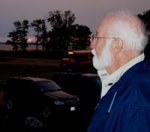
December 22, 1858. On "The Africa Station" cruising for slavers. U.S. Sloop of WarVincennes, Comdr B. I. Totten, USN, Commanding.
Vincennes has stopped and boarded a US flagged vessel, the barque Julia Dean. Leading the inspection/investigation team is 29-year-old Lieut. Daniel L. "Larrie" Braine. Lieut. Braine is looking for evidence that Julia Dean is engaged in the illegal slave trade.
*Multiple ship's papers? Not found.
*Unusual number of water casks? Yes, far in excess of needs of the crew.
*Provisions beyond requirements for claimed voyage? Yes.
*Multiple and/or false log books? Not found.
*Unusual numbers and wages of crew for claimed voyage? Many crew beyond needs, very high wages.
*False Consular Certificate? Yes. Impression of US Half Dollar substituting for seal.
In addition, Lieut. Braine found a supply of timber sufficient to build a slave deck that the crew could not explain and a large supply of hand cuffs for which there was only one explanation.
Larrie sent the boat back to CDR. Totten on the Vincennes with his findings and stated his firm opinion that they had, indeed, captured a slave trader.
In anticipation of orders to that effect, Larrie placed the crew under arrest and confined the Master and First Mate in irons, irons and quarters designed to restrain African slaves that now became the misery of the slave traders. The anticipated orders soon arrived along with the following:
U.S. Ship "Vincennes"
off Cape Coast Castle
December 22nd, 1858
Lieut. D.L. Braine, U.S. Navy
Sir.
You are hereby directed to take charge of the Prize Barque "Julia Dean" captured at this place.
As soon as the Prize Crew are transferred to her, and all necessary arrangements made, you will proceed with her to The United States taking her if possible into the Port of Boston or if the weather is such that you find that you cannot do so you will proceed to Norfolk. And at either port at which you may arrive you will take her to the Navy Yard and report to the commanding Officer of the Station, and through him, to the Secretary of the Navy.
You will please represent to the Commandant of the Station that it is advisable to have the "Julia Dean" well overhauled as there is every reason to believe that there is a large sum of money on board, as well as another set of papers which we have not yet been able to discover.
You will exercise your own judgement in the treatment of those persons captured in the Prize, and if you should consider it necessary for the safety of the ship you must not hesitate to put in irons one or all of them.
Trusting your efficiency as an Officer I feel that I need give you no further instructions.
If the Department should be pleased to order you out to finish the cruise on this ship I shall be much gratified.
I am very respectfully,
B.I. Totten, Comdr.
Larrie noted that there was a quantity of powder aboard, presumably to supply the slave catchers, but there was no protection against lightning. USN regulations forbade carrying powder unless protection was installed on the ship. As soon as they were under weigh for the U.S.A. he ordered the powder thrown into the sea.
Several of the persons onboard claimed to be innocent passengers rather than crew. One of these, a man named Augustus Treyson was quite ill with "African fever". That was probably Malaria. Larrie, after interviewing all passengers and crew, allowed most of the crew to work with his "Prize Crew" in operating the ship. He kept the Master and First Mate confined.
January 25, 1859, 1225 hours: 0.49.45N, 30.10.30W: The ship suddenly jolted Larrie from his desk in the Captain's cabin. It grated and shook as though aground. Larrie dashed on deck and ordered the helm up and a lead cast. The lead found no bottom at the end of 23 fathoms of line.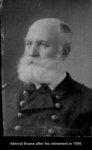
The trembling and shaking of the ship continued for about 5 minutes, then stopped. They tried the pumps and found the ship was not leaking. When later examined in drydock no damage was found.
Somewhere on this ship there is probably a second set of papers and a large quantity of money. Larrie restrained himself and his crew from searching, believing that was the responsibility of the U.S. Marshals to whom he would deliver the ship upon reaching Norfolk. He had decided on Norfolk (Gosport Navy Yard) because of the sails.
The sails of the Julia Dean were in very poor condition. In his log, Larrie described them as rotten. He had to limit the loading of the sails that hadn't already blown out and this slowed the ship considerably.
February 14, 1859, 1425 hours. Augustus Treyson is found dead in his bunk. Larrie and crew buried him at sea and gathered his personal effects for delivery to his widow in Havana (spelled Havanna in the log).
February 21, 1859: Julia Dean arrives at Gosport Navy Yard, Norfolk, Virginia.
April 14, 1859. After weeks of paperwork and legal events, Lieutenant Braine is ordered to the Receiving Ship, North Carolina, to await orders.
Editor's note: Want to start your own ships log? Log books can be found on iboats.com.
[FONT="](JB Cornwell writes from "The Hideout" in Whitt, TX, and is also an expert moderator, instructor, and fountain-of-knowledge in the iboats.com Boating Forums. Admiral Braine is JB's great grandfather on his mother's side and served from 1845-1892. Admiral Braine was involved in many historic events during that time and was a protege of Sam Houston and a personal friend of several Presidents of the US. A WW II Destroyer, DD630 was named "Braine" in his honor. JB's family has served in the military for eight generations, with his daughter Alice recently promoted Commander, USNR.)[/FONT]
December 22, 1858. On "The Africa Station" cruising for slavers. U.S. Sloop of WarVincennes, Comdr B. I. Totten, USN, Commanding.
Vincennes has stopped and boarded a US flagged vessel, the barque Julia Dean. Leading the inspection/investigation team is 29-year-old Lieut. Daniel L. "Larrie" Braine. Lieut. Braine is looking for evidence that Julia Dean is engaged in the illegal slave trade.
*Multiple ship's papers? Not found.
*Unusual number of water casks? Yes, far in excess of needs of the crew.
*Provisions beyond requirements for claimed voyage? Yes.
*Multiple and/or false log books? Not found.
*Unusual numbers and wages of crew for claimed voyage? Many crew beyond needs, very high wages.
*False Consular Certificate? Yes. Impression of US Half Dollar substituting for seal.
In addition, Lieut. Braine found a supply of timber sufficient to build a slave deck that the crew could not explain and a large supply of hand cuffs for which there was only one explanation.
Larrie sent the boat back to CDR. Totten on the Vincennes with his findings and stated his firm opinion that they had, indeed, captured a slave trader.
In anticipation of orders to that effect, Larrie placed the crew under arrest and confined the Master and First Mate in irons, irons and quarters designed to restrain African slaves that now became the misery of the slave traders. The anticipated orders soon arrived along with the following:
U.S. Ship "Vincennes"
off Cape Coast Castle
December 22nd, 1858
Lieut. D.L. Braine, U.S. Navy
Sir.
You are hereby directed to take charge of the Prize Barque "Julia Dean" captured at this place.
As soon as the Prize Crew are transferred to her, and all necessary arrangements made, you will proceed with her to The United States taking her if possible into the Port of Boston or if the weather is such that you find that you cannot do so you will proceed to Norfolk. And at either port at which you may arrive you will take her to the Navy Yard and report to the commanding Officer of the Station, and through him, to the Secretary of the Navy.
You will please represent to the Commandant of the Station that it is advisable to have the "Julia Dean" well overhauled as there is every reason to believe that there is a large sum of money on board, as well as another set of papers which we have not yet been able to discover.
You will exercise your own judgement in the treatment of those persons captured in the Prize, and if you should consider it necessary for the safety of the ship you must not hesitate to put in irons one or all of them.
Trusting your efficiency as an Officer I feel that I need give you no further instructions.
If the Department should be pleased to order you out to finish the cruise on this ship I shall be much gratified.
I am very respectfully,
B.I. Totten, Comdr.
Larrie noted that there was a quantity of powder aboard, presumably to supply the slave catchers, but there was no protection against lightning. USN regulations forbade carrying powder unless protection was installed on the ship. As soon as they were under weigh for the U.S.A. he ordered the powder thrown into the sea.
Several of the persons onboard claimed to be innocent passengers rather than crew. One of these, a man named Augustus Treyson was quite ill with "African fever". That was probably Malaria. Larrie, after interviewing all passengers and crew, allowed most of the crew to work with his "Prize Crew" in operating the ship. He kept the Master and First Mate confined.
January 25, 1859, 1225 hours: 0.49.45N, 30.10.30W: The ship suddenly jolted Larrie from his desk in the Captain's cabin. It grated and shook as though aground. Larrie dashed on deck and ordered the helm up and a lead cast. The lead found no bottom at the end of 23 fathoms of line.
The trembling and shaking of the ship continued for about 5 minutes, then stopped. They tried the pumps and found the ship was not leaking. When later examined in drydock no damage was found.
Somewhere on this ship there is probably a second set of papers and a large quantity of money. Larrie restrained himself and his crew from searching, believing that was the responsibility of the U.S. Marshals to whom he would deliver the ship upon reaching Norfolk. He had decided on Norfolk (Gosport Navy Yard) because of the sails.
The sails of the Julia Dean were in very poor condition. In his log, Larrie described them as rotten. He had to limit the loading of the sails that hadn't already blown out and this slowed the ship considerably.
February 14, 1859, 1425 hours. Augustus Treyson is found dead in his bunk. Larrie and crew buried him at sea and gathered his personal effects for delivery to his widow in Havana (spelled Havanna in the log).
February 21, 1859: Julia Dean arrives at Gosport Navy Yard, Norfolk, Virginia.
April 14, 1859. After weeks of paperwork and legal events, Lieutenant Braine is ordered to the Receiving Ship, North Carolina, to await orders.
Editor's note: Want to start your own ships log? Log books can be found on iboats.com.
[FONT="](JB Cornwell writes from "The Hideout" in Whitt, TX, and is also an expert moderator, instructor, and fountain-of-knowledge in the iboats.com Boating Forums. Admiral Braine is JB's great grandfather on his mother's side and served from 1845-1892. Admiral Braine was involved in many historic events during that time and was a protege of Sam Houston and a personal friend of several Presidents of the US. A WW II Destroyer, DD630 was named "Braine" in his honor. JB's family has served in the military for eight generations, with his daughter Alice recently promoted Commander, USNR.)[/FONT]