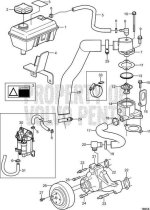
still trying to understand the mechanics: in the raw water cooled engine I have the impeller pump, that pushes water into the engine and also the pump that circulates the water in the engine, pushing it through the collectors in the exhaust.
In the freshwater cooled engine, the circulation pump only moves the water around in the engine, while the impeller pump has to do the jop alone of pushing the water throught he HX and the exhaust.
Does that work if impeller pump and hose diameter are the same?
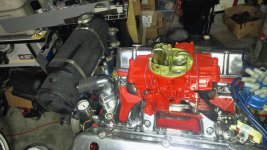
here is your volvo penta 271C setup (regardless if you are running the stock carb or EFI)
water comes in from the drive intake, up thru the H-frame swivel shaft to the leak-prone casting to the hose that goes to the transom shield. From there, the water goes thru the power steering cooler, thru the optional oil cooler to the raw water pump. From the raw water pump, water is pushed into the thermostat housing where it feeds the engine and the exhaust. the thermostat opens and closes as needed to mix internal warm water with the incoming cool water. the circulating pump is circulating water from the block up thru the heads to the intake and back. if the thermostat is open, some of that hot water is pushed out to the lines and goes thru the exhaust manifolds/elbows and out. if the thermostat is closed, that water goes back thru the block and heads.
from the thermostat housing, there are two lines that run to the exhaust, one on port, one on starboard. where they enter the manifold, circulate around the cooling water jacket of the manifold and get pushed up thru the elbows where gravity and exhaust flow takes it out the Y-pipe and thru the drive
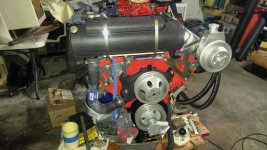
the same engine with a heat exchanger
water comes in from the drive intake, up thru the H-frame swivel shaft to the leak-prone casting to the hose that goes to the transom shield. From there, the water goes thru the power steering cooler, thru the optional oil cooler to the raw water pump. From the raw water pump, water is pushed into the Heat Exchanger raw water side where it goes thru the heat exchanger 4-6 times back and forth, then out the ports where it feeds the the exhaust exhaust manifold. the thermostat opens and closes as needed to move internal warm glycol from the block thru the heat exchanger or back thru the block. the circulating pump is circulating glycol from the block up thru the heads to the intake thru a simple thermostat cover and into the HX or thru the small bypass hose back to the block. if the thermostat is open, some of that hot glycol is pushed to the HX where it is cooled and returned if the thermostat is closed, that water goes back thru the block and heads via the bypass line between the thermostat cross-over on the manifold and the circulating pump.
think of a HX cooled motor like the motor in your car. equate the radiator with the HX. and the incoming air as the seawater
in your car, the air goes thru the radiator and then flows over your exhaust to cool it where it is then disbursed back to the air from under your car. the engine circulating pump circulates the glycol as needed between the engine and the radiator
in a raw water cooled engine, remember, the thermostat is not operating as a blocking valve, however its operating as a mixing valve to mix hot and cold water on the discharge.
in a heat exchanged engine, the thermostat operates as a blocking valve.
your motor came with a Johnson F5B raw water pump. if you need more flow, the F6B is a direct drop-in
also, if you have not inspected the leak-prone white-metal raw water fitting on top of the drive swivel under the transmission input, I suggest you do. those things only last 5 years in fresh water and about 2 years in salt before the corrode to the point of leaking. the current plastic ones will work, however they last about 5 years and crack.
i suggest with or without the heat exchanger, install a water pressure gauge. I plumbed mine after the raw water pump