Horse power question

Porto

Petty Officer 3rd Class
Joined
Jul 9, 2004
Messages
88
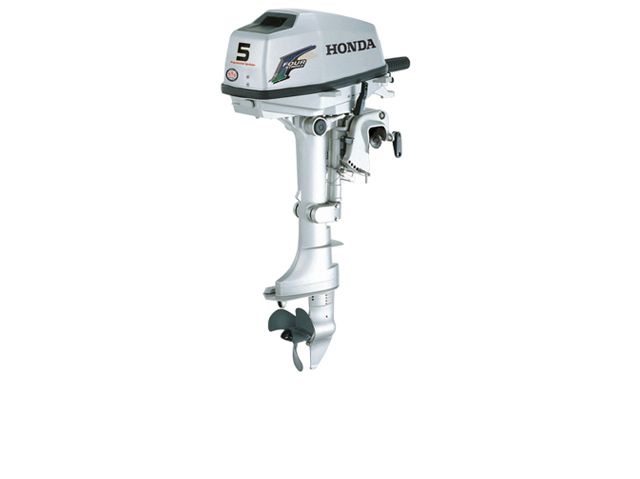
I was wondering.......<br /><br />Let's presume a 40 hp motor generates 20 hp at half throttle. Will it burn more gas at half throttle then a 20 hp at full throttle? In other words, if a 40hp and 20 hp motor are both pushing the same size boat at the same speed, and the 20hp is at full throttle, which is burning more gas? Does this make sense?
 

Desert Rat

Cadet
Joined
Apr 12, 2004
Messages
22
Re: Horse power question

I understand what you are asking, but there are many more variables to take into consideration than just hp and speed. Such as, does the boat plane at half throttle with the 40 or with the 20 at full throttle? I would think it would be close. Maybe the 40hp would run a little more efficient. I'd certainly rather not have to run a 20hp WOT all the time just to maintain the speed you want. It's an interesting question though. How much gas does it take a motor to put out half it's rated horsepower. I'm sure it's different for every motor under infinite circumstances.
 

achris

More fish than mountain goat
Joined
May 19, 2004
Messages
27,468
Re: Horse power question

The horsepower required to double the speed of a vessel is 4x. It's the law of squares.<br /><br />Chris................
 

Paul Moir

Admiral
Joined
Nov 5, 2002
Messages
6,847
Re: Horse power question

The 40hp would burn less gas. But this is only because an outboard is usually most efficent in gas consumption around 1/2 to 3/4 throttle. After that, fuel consumption usually goes to pot in exchange for power.<br />Take for example a carburated 90hp Johnson:<br />RPM - GPH - GPH/RPMx1000<br />1000 - 1.41 - 1.41<br />2000 - 3.02 - 1.51<br />3000 - 4.02 - 1.34<br />4000 - 6.90 - 1.72<br />5000 - 11.36 - 2.27<br />Givin that the RPMS turned is close to consitant with horsepower produced, you can clearly see how effeciency peaks around 2/3 throttle on this engine.<br /><br />This is of course without any consideration for weight, type of boat, etc. But I think this is the sort of answer you're looking for.<br />Ideally, I think a 30hp engine would beat them both. :)
 

jim dozier

Lieutenant Commander
Joined
Jan 8, 2003
Messages
1,970
Re: Horse power question

I agree with Paul Moir. As long as the boat is on a plane you'll get better mileage at ~2/3-3/4 throttle. This is parltly due to the fact that the engine is operating at full ignition advance but not full open carb butterfly at part throttle postitions. The full ignition advance comes in before full carb throttle. <br /><br />This all depends on the boat. If the boat is underpowered and it requires full throttle just to keep it on a plane, reducing throttle won't save you any gas. Alternately, if the boat is way overpowered with a 20hp, putting a 40 hp on it isn't going to save gas either.
 

Jdeagro

iboats.com Partner
Joined
Jul 30, 2003
Messages
1,682
Re: Horse power question

Porto;<br /><br />The common school of thinking is that a larger engine works less and therefore will use less fuel. I could not disagree more! Maximum torque is usually achieved at about 67% power on four stroke engines and a bit higher on two stroke engines. Running a larger engine a 1/3 to 1/2 throttle ( below the maximum torque range) is grossly inefficient. Someone said that there are too many variables and that is correct. <br /><br />What most people don't seem to understand about boat performance is that the hull efficiency is more important than HP. Truckers understand that large air soils in front of the Trailer box will improve fuel economy because it redirects the air up and over the trailer. Race car builders understand that air foils help the performance. Airplanes must have flaps, trim tabs &etc. Adjusting the hull design to compensate for the conditions is far more important than HP.
 

Forktail

Ensign
Joined
Feb 11, 2002
Messages
977
Re: Horse power question

Both outboards would be producing 20 net HP at the crankshaft. Both are working equally as hard. The fact one outboard has the potential to produce 40 hp and one doesn't is irrelevant. The object would be do find out which outboard is most efficient at 20 HP, or in other words, which outboard burns the least amount of fuel to produce the same amount of work.<br /><br />When looking at efficiency, you have to look at thermal efficiency and mechanical efficiency under exactly the same conditions.<br /><br />Thermal efficiency is heat efficiency, and based on how much of the energy (ability to do work) of the burning fuel is converted into horsepower. Each outboard has a unique thermal efficiency based on its cooling system, lubrication system, exhaust system, and operating rpm, etc.<br /><br />Mechanical efficiency is based on the relationship of power developed within the engine to the actual horsepower at the crankshaft. Again, each outboard has a unique mechanical efficiency based on internal friction, gear reduction, operating RPM, etc.<br /><br />A larger outboard must overcome greater internal frictions, larger internal forces, compensate for its extra weight and drag, etc. It probably has less mechanical efficiency at 20 HP, but greater thermal efficiency. A smaller outboard must obviously work harder to get the same amount of work done as the larger displacement outboard, but most likely it does it with better mechanical efficiency and worse thermal efficiency.<br /><br />The only realistic solution to this question is to run both outboards under the exact same conditions, doing the exact same amount of work, and measure their fuel usage.<br /><br />My bet is that the smaller 20 HP outboard will be more efficient. After all, it is designed for 20 HP use. The larger 40 HP outboard will simply be waisting a lot of its efficiency running at 20 HP. It is designed for 40 HP use. :)
 
Top