







new vs. old technology

mellowyellow

Vice Admiral
Joined
Jun 8, 2002
Messages
5,327
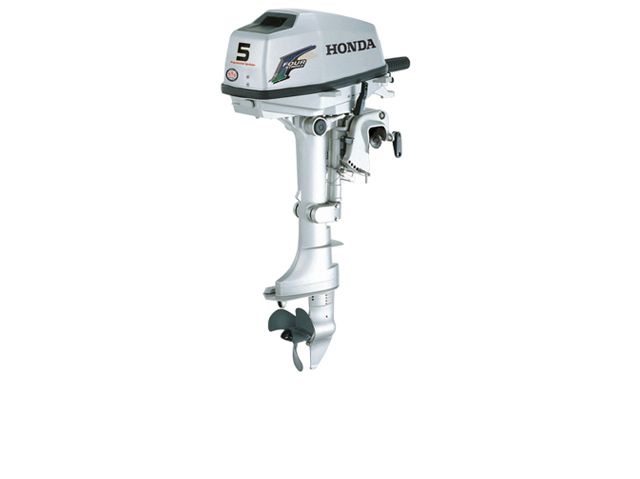
was curious if you feel all the "advances" in OB<br />technology has created less/more reliable motors<br />in recent years (emissions aside).<br />having such a short season offers many opportunities<br />for good/clean/low hr. outboards round these parts.<br />currently own my "newest" motor ever and it's a '70 merc 1150.. LOL<br />these old OB's are pretty bullett-proof! heck,<br />my cuz has had his '79 70hp Jon for 10 years and<br />has never done an ounce of pre-maint, runs old<br />gas etc.<br />rambling now.<br />anyways, curious what you guys think???<br />is less really more on a 2 stroke?<br />curious,<br />M.Y.
 

Chinewalker

Fleet Admiral
Joined
Aug 19, 2001
Messages
8,902
Re: new vs. old technology

The basic motors seem to be alright, but it's all the peripheral stuff that can be a pain in the behind. All the plastic knobs and linkages seem to be quite brittle on some models. Had a 1988 Merc 20hp last year with plastic primer linkage and it was a very clunky, cheap feeling system. I think they're still using something similar on the newer ones.<br /><br />And what's with the primer system used on a lot of late model OMCs? Whatever happened to the good ol' fashioned choke - pull a knob and it operates the butterfly! The electric primers used on the OMCs seem to be finicky and prone to gumming up on some of the motors I've worked on. I guess that seems to be one of those side-thinking technologies, rather than a forward-thinking technology.<br /><br />The first OMC 60-degree V6s of the early 1990s were kinda neat. They made an honest attempt at minimizing the clutter under the hood and it made them much easier to work on. And then the government stepped in...<br /><br />I still don't see anything that has made motors easier to start. I pay close attention to the tuning of my older (1950s) motors and they are almost always 1-2 pull motors. If it takes more than 2 pulls it usually means I've forgotten something...<br /><br />- Scott
 
D

DJ

Guest
Re: new vs. old technology

MY,<br /><br />We'll see.<br /><br />Do you think todays EFI automotive engines are more reliable than yesteryears, carburetors and points?<br /><br />I do.
 

mellowyellow

Vice Admiral
Joined
Jun 8, 2002
Messages
5,327
Re: new vs. old technology

DJ,<br />deff! my 92 4.9L Deville is a dream and gets an<br />avg. of 23mpg, has tons of get-up etc.<br />would rather still have my 71 challenger 383magnum<br />though. could actually work on her myself...
 

rrichard

Seaman Apprentice
Joined
Jul 25, 2002
Messages
38
Re: new vs. old technology

I'm a real big fan of computers and fuel injection, but there's something to be said for yesteryear's technology. Magnetos are simpler than alternator/coil/distributor setups, and you don't need electricity to keep a carburetor running.<br /><br />I like knowing how easy it is to start my old outboard without a battery... Heck, it's 1,000 times more satisfying to pull-start the old thing on the first or second try anyway! <br /><br />With so many of them still running today, you know those old motors are reliable. The EFI motors may be just as reliable mechanically (or not--who knows), but all that extra equipment amounts to more potential points of failure. That's something worth considering, but it's not like we're in airplanes here so...
 

walleyehed

Admiral
Joined
Jun 29, 2003
Messages
6,767
Re: new vs. old technology

I've got to add to this because of the last post, and I'm an aircraft Mechanic........<br />If you bought a brand-spankin' new Continental 520 (CI) 6cyl, piston engine, with fuel injection, the "IO-520"....for 40,000.00, you still get mechanical injector pump and Magneto ignition!!!!!!!!! ;)
 
D

DJ

Guest
Re: new vs. old technology

walleye,<br /><br />Yep, the aircraft industry has been very slow to embrace electronics.<br /><br />I think the reason is that a company like Continental does not have the financial wherewithall to approach the FAA with a new design. It would have to be a joint effort.<br /><br />Also, the fed's haven't gotten into limiting aircraft engine pollutant output-yet.
 

TELMANMN

Chief Petty Officer
Joined
Jun 9, 2003
Messages
465
Re: new vs. old technology

Not afraid of new technology. I am electonic/computer trained so have no qualms about it. If manufacurer's use reliable parts(both mechanical and electronic) no problem but if going to use in a remote setting where parts are lacking or non existing,(KISS) keep it simple stupid. Need fuel,spark and air.
 

boating brad

Petty Officer 1st Class
Joined
Jun 7, 2003
Messages
201
Re: new vs. old technology

i think the manufacturers are aiming toward emmisions, not reliability. since the outboard world went away from ignition points and distributors the reliability got much better, but many lakes in the west are putting restrictions on outboards due to emmisions, and with the four strokes selling strongly because of low emmisions, the two strokes must be improved in that area! todays fi outboards are very environment friendly but getting more complex. "all that plastic junk" aimed at less weight but not too durable. i'm waiting for them to come out with a plastic engine block :D
 

tmcalavy

Rear Admiral
Joined
Aug 29, 2001
Messages
4,005
Re: new vs. old technology

Hi-tech is okay, back at the barn where I can get a beer and have the storms go over my head. Out on the water where the storms hurt, and the sharks and pirates prowl, I would rather have my 1936 Neptue OB 34-A four horse to get me back to the barn and out of the storm than any of the new plastic-tech crap. Murphy's Law, Murphy's Law...can't beat cast iron and bailing wire.
 

dinsdale

Seaman
Joined
Jul 28, 2002
Messages
61
Re: new vs. old technology

My 1965 Merc 650 has been running every year since 1965 with not a single problem. Regular maintenance is all that was needed to keep this engine mint.<br /><br />When people can say that in 2033 about FI 4 strokes, maybe I'll trade in my old merc then.<br />Until then, i'll just keep up my regular maintenance and see if anything major wears out over next 40 years.
 
Top