Re: Thru Hub vs Pin Prop
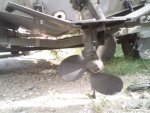
Some engines have a slick prop shaft with a hole at the rear and no threads.....been a very long time, maybe two holes: The prop is placed on the shaft, a pin is inserted through the hole in the rear of the prop and the hole in the shaft, a specially made cap fits over the pin to keep it in place and a cotter pin secures the cap. The prop usually has a rubber hub to cushion shifting shock and soften the shock from hitting something. If the pin shears due to hitting an obstruction, the prop spins freely on the shaft. Another thing that would allow the prop to not be firmly locked to the prop shaft is if the rubber hub slips...worn out. This can be detected by marking the bronze part that the pin goes through out to the outside of the prop...the alum part. If the hub slips, after a test run your marks will no longer be in alignment.
Otherwise you have a splined prop shaft, threaded on the end, no holes, that accepts a splined prop hub. In today's market there are plastic replaceable hubs and the older design rubber cushion hubs...function as the hub mentioned above. The plastic hub should be solid unless you stripped it and that would be obvious.....the rubber hub you mark as you did above and look for misalignment of your marks to check for any slippage. These props use a thrust washer on the prop shaft first, the prop, a locking ring, and a self locking nut for Merc. Others may use a cotter pin to keep the nut on.....having a senior moment....forgot what you call a nut with slots in it like you find on the front axle of automobiles....but that is what can be used with the cotter pin.
The advantage to the splined, rubber slip hub over the pin/splined plastic hub, is that this hub recovers nicely from a strike whereas all the others are subject to unrepairable damage when struck. If you are on the windward side of rip rap and the wind is blowing you into the rocks, this single thing could be a life/boat saver. BTDT
What else do you want to know?
Mark