



Trim adjustment etc.

mcgolfr

Recruit
Joined
Jun 23, 2011
Messages
5
I am a newbie to both this forum and boats in general. I bought a used 'toon (2000, 20' Landau) as my first ever boat and got a 15 minute lesson on operating it -- therefore -- I have some questions:

Trim is adjusted using a small toggle located on the power lever (adjusted by thumb). The previous owner said to adjust to the first mark on the gauge (gauge has 4 marks like a gas gauge) -- how do I know if I need to adjust differently -- what does it mean if I go to the second or third mark?

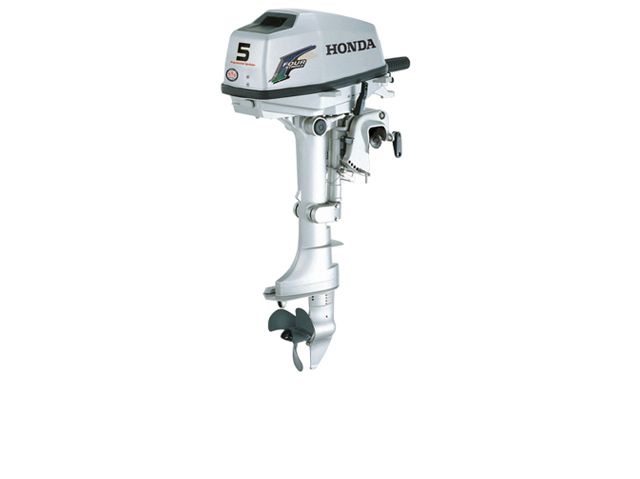
What is a 4-stroke vs. a 2 stroke engine -- mine is a 90hp 4 stroke. The prior owner said regular gas is all I need-- anything else I should know or be aware of????

I am having great difficulty learning to steer -- a pontoon is much different than a car since steering is in the rear -- I tend to oversteer because the response seems much slower than a car. I have to store the 'toon in a lift and I have a difficult time parking!The first time, the neighbors felt sorry and came out and pulled me into the lift (how embarassing is that????) Any tips on learning how to.....

Many thanks,
Jim
 

Robbabob

Senior Chief Petty Officer
Joined
Jun 5, 2009
Messages
678
Re: Trim adjustment etc.

Hi Jim,

Welcome to iboats and boating!

A few things I can help with:

TRIM -- When going no-wake speed, always trim all the way in/down for the most stability.
Steering -- You will learn that making small adjustments to keeping course will be enough so as to not over-steer and constantly turning left and right to zig zag the straight line. You'l learn to anticipate the next adjustment and before long it will look like a real straight line.
While most of boating is a relaxing event, docking can be the most stressful part of it when learning. Practice practice practice is the only to get it down. Easier to practice when nobody is around... and you're not in danger of hitting the dock.. meaning, anchor a buoy in an empty cove or somewhere not being traveled and see about approaching that buoy from different angles. Practice in forward and reverse, seeing what the wind and water flow does to your approach. Like before, anticipating (knowing) what to expect helps take some of the unexpected out of the true docking experience.

Remember this!!!! those that helped you received help once upon a time. And you will likely help someone else in the future. They may feel embarrassed, but greatly appreciate you came along.

Enjoy the new 'toon and look forward to the others chiming in on the engine.
 

mcgolfr

Recruit
Joined
Jun 23, 2011
Messages
5
Re: Trim adjustment etc.

Robb:
Thanks for the response -- I will practice!
J.
 

Silvertip

Supreme Mariner
Joined
Sep 22, 2003
Messages
28,771
Re: Trim adjustment etc.

The seat of your pants is a far better indicator of what is the best trim setting than a gauge will ever be. Trimming IN (down) keeps the nose of the pontoon down and is best used at slow speeds. As you increase speed (above 1/2 throttle for example) begin making small trim UP adjustments. At some point you will feel the pontoon pick up a coupple miles per hour in speed. Pontoons don't plane (skim over the water) like a boat so they tend to plow. Therefore trim has far less effect but only by playing with the button will you determine what setting is best. And also understand that there is not ONE and ONLY trim setting for all conditions. Speed and load impact that setting. Just do not trim up so far that the prop loses bite on the water. Raising the engine too high can prevent it from intaking water for cooling.
 

The Rooster

Ensign
Joined
Apr 28, 2011
Messages
936
Re: Trim adjustment etc.

Welcome to iboats. +1 for Rob, and Silvertips comments. Pontoon boats are definetly extra sensitive to the wind and current direction. If at all possible, keep the nose of the toon into the wind when approaching docks, other boats you might tie up to ect. Most pontoon boats don't require a lot of trim when running. I've got a similar trim gauge and starting at the lowest point, rarely trim past that first mark on the gauge. Any higher and my prop usually begins to lose its bite. If this happens to you, usually engine rpms will increase while you actually lose speed. Good luck!!!
 

lncoop

Vice Admiral
Joined
Apr 18, 2010
Messages
5,147
Re: Trim adjustment etc.

The guys have pretty well covered it, but one thing I've found helpful is to think of the barge as a 2500 pound sail. That reminds me to compensate for what I know the wind will do to me when I'm aiming for the sandbar, trailer, etc., or in your case the lift. That way instead of fighting the wind you're putting it to work in your favor.
 

lmuss53

Lieutenant Junior Grade
Joined
Sep 9, 2008
Messages
1,227
Re: Trim adjustment etc.

Plus 3 or 4 for all the above. if you trim up too far and the engine lets go pull the throttle back quickly, you don't want to let the motor free rev and trimming back down won't always let it get a new bite. In time you will recognize when you are getting close to that letting go point, and trim back down a couple of taps to keep the motor at the sweet spot. The previous owner probably learned all that thru trial and error and told you where he had the best results. If you try to run with the motor all the way down/in you will probably feel some torque pulling the steering to the left. Trim up/out until that gets to feel more neutral, not pulling left or right. The most important thing you can do now is practice, you will get it all in figured out. Welcome to the boating world and iboats, enjoy that new 'toon.
 

Water logged

Petty Officer 1st Class
Joined
Nov 15, 2008
Messages
377
Re: Trim adjustment etc.

Not all boats are the same, but with my boat I can hear a reduction in water noise as I close in on the proper trim. That may be because I have lifting strakes, I don't know. As I increase speed I start to raise trim. I will hit a point where it quiets down. At this point I seem to continue to pick up speed without added throttle.
If I change my cruising speed I readjust trim to get the same sound.

Glenn
 

GrandDad

Cadet
Joined
Aug 22, 2011
Messages
19
Re: Trim adjustment etc.

I know that this is a late response, but since I am new to the forum, I thought I would respond to the question about trim.

The basic purpose of trim is to raise the forward part of the boat as you go faster. So, as Robbabob indicated, at idle or no-wake speed, the trim is generally trimmed all the way down (or nearly so). as you go faster, you generally trim further up to raise the bow and improve both handling and speed. The way to know if you have it at the right pooint for the spped you are going (and the water conditions) is to adjust it a little further up and see if speed increases or decreases, or likewise a little further down. The best trim is generally the trim that gives you the highest speed at that particular RPM.

In other words, if your trim is too low, your bow is plowing through the water and slows you down. If is is to high, the propeller starts having too little water behind it (kind of starts coming out of the water) which is not goo for spped and isn't good for the motor either. As you get more experienced, you can also hear when the trim is too high and the propeller starts "losing its grip."

Hope this made sense....
 

Silvertip

Supreme Mariner
Joined
Sep 22, 2003
Messages
28,771
Re: Trim adjustment etc.

You have a 4-stroke engine which is no different than the engine in your car (except it sits vertically rather than horizontally as in the car). It also requires oil and filter changes. It also requires that YOU check the oil level BEFORE each outing. Most drivers today don't even know how to open the hood on their car and if they did they probably couldn't locate the dipstick. This is one exercise that can save your engine and it costs nothing other than a three minutes before an outing. That engine also has specific maintenance items such as valve adjustment and timing belt replacement.
 
Top