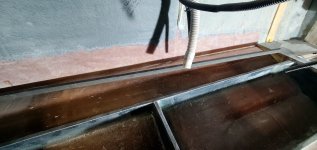
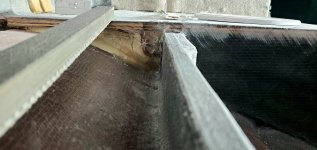
Since you are at the cleats stage, the thing that will decide whether this repair lasts is what happens to the deck layer above it and to the fasteners under whatever goes on top. Two things I would do now rather than later.
First, every screw or bolt that will sit under the finished floor gets bedded, not just driven. Countersink the head slightly, put the screw in thickened epoxy or 3M 4200, and then seal the head itself before the decking goes down. On a rebuild like this the stringers are done properly, and then water follows a dozen unsealed fastener heads into the new core and you are back in there in five years. Glass-wrapping the cleat does nothing at the screw line; sealing the screw line does everything.
Second, before you choose the finish, decide the hatch layout. Whatever you put down — carpet, vinyl, EVA — wants a 3–4mm gap at every hatch ring and at the engine hatch split, and it wants the substrate flat and dry, not just sound. Carpet hides a bad substrate for a season; a sheet of foam shows every lump on day one.
Full disclosure, I cut EVA foam decking for boats for a living. On a 230 cockpit I would go 6mm and glue it two-part after the deck is sealed — but the sealing and the hatch gaps matter more than which finish you pick.
Mod edit: No advertising

 In the meantime im just going to move forward with the repair and leave those compartments open.