Kwanza
Seaman Apprentice
Thread starter- Joined
- Mar 6, 2026
- Messages
- 40
After doing some fixes to my cooling system, I took the boat for a test ride.
One of the first out-of-ordinary issues I noticed straight after launching and starting engine was that my dash voltmeter was indicating 12 V, while it usually indicates 14 V. The battery was charged, having spent the previous 24 hrs on a charger.
Other gauges behaved as expected, but the dash voltmeter would not go above 12 V.
After approximately 7 km / 20 minutes of cruising on a flat water, with ~22 knots, ~3000 RPM, my engine suddenly shut down, and I was not able to restart. Cranked, turned over, no start. Checked for spark, it was OK. the cut out was surprisingly brisk, not loosing power and slowly dying out, but almost very quick shut-off. My fuel gauge indicated half tank, as expected, and I added more fuel once arrived home, as a check. All fuses seem intact, did not check relays.
Fuel filter is approximately 2 years old.
Is it possible that my dead? alternator impedes fuel pump to function?
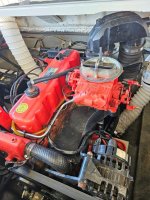
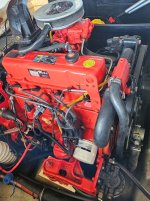
I did disconnect what I think is the fuel line into the carburetor and can't notice any fuel being pumped either while manually priming or attempting ignition. I am referring to the silver metallic pipe entering the carburetor on the left side of the image (flame arrestor removed only for these tests)
How can I check alternator in a no-start situation, or how can I check the fuel pump?
At ignition, I have a default alarm that only goes off after successful ignition, so can't really listen to the fuel pump....
Thank you for any suggestions.
One of the first out-of-ordinary issues I noticed straight after launching and starting engine was that my dash voltmeter was indicating 12 V, while it usually indicates 14 V. The battery was charged, having spent the previous 24 hrs on a charger.
Other gauges behaved as expected, but the dash voltmeter would not go above 12 V.
After approximately 7 km / 20 minutes of cruising on a flat water, with ~22 knots, ~3000 RPM, my engine suddenly shut down, and I was not able to restart. Cranked, turned over, no start. Checked for spark, it was OK. the cut out was surprisingly brisk, not loosing power and slowly dying out, but almost very quick shut-off. My fuel gauge indicated half tank, as expected, and I added more fuel once arrived home, as a check. All fuses seem intact, did not check relays.
Fuel filter is approximately 2 years old.
Is it possible that my dead? alternator impedes fuel pump to function?
I did disconnect what I think is the fuel line into the carburetor and can't notice any fuel being pumped either while manually priming or attempting ignition. I am referring to the silver metallic pipe entering the carburetor on the left side of the image (flame arrestor removed only for these tests)
How can I check alternator in a no-start situation, or how can I check the fuel pump?
At ignition, I have a default alarm that only goes off after successful ignition, so can't really listen to the fuel pump....
Thank you for any suggestions.