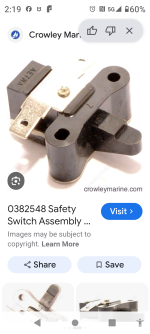
If
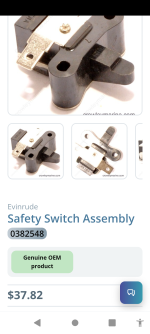
nothing is physically pressing on the switch plunger, then it’s
not a direct push-button style actuation. There are two common ways that 0382548-type neutral switches get triggered:
1) Cam / ramp built into the shift mechanism (most common)
Even if you don’t see a rod pushing it, the switch is usually positioned so that:
- A cam, notch, or flat spot on the shift shaft/linkage lines up in neutral
- In neutral, the cam allows the switch to relax into its “closed” position (internal spring does the work)
- In gear, the cam moves away and the switch opens

So nothing “hits” it hard—you’re just seeing
position-based alignment, not obvious contact.
2) Magnetic (reed switch) style (less common but used on some setups)
Some versions use:
- A small magnet on the shift linkage
- A sealed reed switch
How it works:
- In neutral → magnet is aligned with the switch → contacts close internally
- In gear → magnet moves away → contacts open
In this case, there is
zero physical contact, which matches what you’re describing.
3) Ground-through-linkage design
On certain older designs:
- The switch may always be physically “closed”
- But the ground path only exists in neutralbecause:
- The linkage or cam connects a grounded metal path only in neutral
So it
looks like nothing is happening, but electrically the ground path is being completed.
What likely applies to your case
If you truly see:
- No plunger movement
- No contact point
- No cam touching it
Then the strongest possibilities are:
- Magnetic reed switch setup, or
- Hidden cam alignment (very subtle contact)
Quick way to confirm
- Put a multimeter on the switch leads
- Slowly move the shifter through positions
If it switches cleanly ON/OFF without any visible mechanical action → likely
magnetic
If it changes right at a specific position → likely
cam alignment

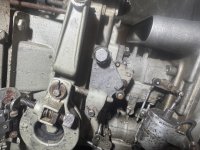
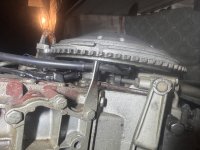
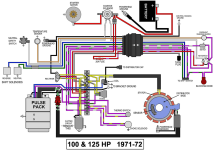
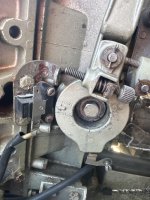 A couple days ago everything ran great. Only thing was I would have to occasionally adjust this arm to move the start arrow because i would turn the key and nothing would happen. I removed this arm and adjusted some stuff (I have since adjusted it back, I counted) trying to get the start arrow in the right spot. After I took that arm off and put it back on no matter what I wiggle and I’ve moved it thru full range of motion, I cannot get it to crank at all. Bridged the starter solenoid and it cranks just fine. Does anyone have any ideas or notice anything obvious from the images that I’m missing?