Personally, with everything described of the engine defaults and things tried, I'd be concentrating on the MAP sensor from testing of all the circuits, the sensor itself and ultimately trying new MAP sensor that should be Merc part number
8M0087834 and ensuring the spark plugs are clean of fuel (running rich symptoms).
The MAP sensor is one of the heaviest working controls of the fuel calculations of this system to where if they go bad internally 'usually ends up as a running rich condition toppled with it's an intake air temperature reader too (< More fuel control)...
Also try physically touching the MAP sensor with a bit of say downwards effort to see if the symptoms change at all...I've had a few do that to me in the past.
Genuine Mercury Marine, Mercruiser and Mercury Racing engines, parts, propellers. Authorized dealer with large inventory, great prices, fast shipping!

www.mercruiserparts.com
350 MAG MPI HORIZON ALPHA/BRAVO 0W310000 THRU 0W649999

www.mercruiserparts.com
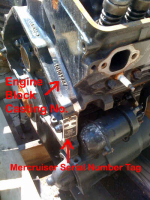
Look down by your engine starter (starboard, rear side of the boat/engine) to see if there is a Mercruiser serail number tag mounted to the engine block.