Re: Stranded in the Catalina channel!
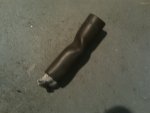
First, the check valve is a safety and function nessessity, Replace it but NEVER totaly remove it. It allows fuel to flow when the pump put suction on it, but will stop the flow in the event of a fuel line rupture. Without that check valve, a fuel line rupture could mean all your fuel ends up in the bildge of the boat, or getting pumped out into the water via a bildge pump.
I would back paddle on checking things. fuel tank vent, it should have no restrictions, check it twice. try running engine with fuel filler cap off. The fuel pick up tubes, pull them & check screens, check that they arnt clogged. Consider shortning them 1/4 inch. That keeps them up off the bottom and helps from picking up sedament and water. Use a hand pump, and draw a bit of fuel off the bottom / lowest point of the tank to check for water, dirt, sedament. Replace check valve. Peplace any old fuel lines with new. [ Remember, a working check valve will stop fuel if there is a hole in the line, and respectivly, if its before the pump, you could be sucking in air at that hole when the engine cranks, meaning no fuel is getting pulled up and out of the tank. if your fuel lines are rubber and a few years old, try replacing them. Check fuel pump, it should have a flow rate, @ fill a container up a certain amount in a set time, & have a certain pressure, get a pressure guage and test it. Check/replace water seperator filter. A clean looking water sep, filter can stop fuel if it has become saturated.
Now, assuming fuel is getting to pump, & pump has proper flow and pressure. time to head up to the carb. There is typicaly a small filter in the carb connection fitting where the fuel line connects to the carb, pull it out, clean of replace. Now, back track down the fuel line, does it rest on something that gets hot? metal lines on hot surfaces can cause vapor lock so be sure there is clearance around the fuel line.
Install a clear inline filter in your line, maybe even in two places. This gives you the visual, seeing the fuel tells you its at least getting that far. They are cheap, and save buckets of guessing. Also, a fuel pressure guage, at most auto parts stores take the guess work out of things.
Research your fuel pump. thats a good 30 minute investment, @ knowing if its 1 or 2 daphrams, if it has an internal filter or sedament bowl,
A note on gas pouring into the carb. The SAFE way is to use a squirt bottle. the design @ a windex bottle. Be sure its gasoline compatable. Pouring from any jar, glass, can, is risky and can result in a flash back fire.
If you start at the tank, and work forward to the carb, takeing each step twice, double checking everything instead of jumping around and guessing, chances are you can find the issue and fix it. Dont get mad when you find its something simple, like a air leak into the line before the pump but after the check valve. [That section of the fuel line has a vaccume/ suction on it and wont always show a fuel leak or hole. ] And finally, have you made sure all clamps are snug, and did you put a wrap of teflon tape on threaded fittings? remember, on the suction lines, a pin hole will defeat the pump suction, and you will be getting nothing but air, and since no fuel is being lifted from the tank, you wont see a fuel leak..
we had simular issues with our boat. years of setting caused bunches of small issues, from water in tank, mud daubber nest in the tank vent fitting on the hull, and deterioated lines. frustration ended when we cleaned and replaced the typical maintanace stuff, @ all filters and rubber lines, made sure fittings were sealed, and shortened the pick up tubes 1/4 inch getting them up off the bottom of the tank. the clear inline filters now serve as a window into the system should we have any issues, and they are great indicators by their color, of how the other filters are doing...