First boat 1989 Glassmast S187 cuddy restoration

fishinfinn

Seaman Apprentice
Joined
Sep 11, 2013
Messages
43
Re: First boat 1989 Glassmast S187 cuddy restoration

Being that there is a vast amount of data on here I study others rebuild as much as I can
but I find my self at a bit of a cross roads here and am going to ask for your thoughts and opinions.

I live in the city .. and a lot of good neighbors are around I do not want to get them all twisted as I get into this.
The winters here are cold to say the least, and have enough heat for the resins to kick reliably is a big concern.
Heating the hull is not feasible and no shop is available to do this in.

I do have a dbl garage to put the motor and outdrive assembly in if the transom is toast and stage materials from.

I usually have the better part of a week at home to do this ....
 
Last edited:

fishinfinn

Seaman Apprentice
Joined
Sep 11, 2013
Messages
43
Re: First boat 1989 Glassmast S187 cuddy restoration

So path forward

The trailer is pretty heavy duty being made from 4 " Channel Iron and the bunks are full length of the hull. Additional support as I get into this should be easy to accomplish.

hole saw 2" - 3" holes in the floor and investigate the foam.... start to dry out the moisture under the deck.
Begin removing the panels and take them inside for the winter.
Remove the floor.
Remove the foam.
Inspect and post the findings here for help and advice.

I am leaning heavily towards doing the work with Epoxy resins for the main reason that I can make templates and fabricate all the goods in the basement which is heated and if I need to ventilate rather easily. Poly and Vinyl resins I wouldn't even think of doing in the house.

Meranti ply for the transom repair if needed ... MDO for the stringers and bulkheads and floor material.
CSM and 1708 are extensively used with poly resin yet epoxy suppliers tend to steer one away from matting in these repairs. ???
Oak for the stringer that appears to be toast under the engine.

The suggestion to glass a plate on the floor with T-bolts for mounting the seats is already in the floor replacement plan and
I have a few thoughts for the fuel lines that seem to plague us with water intrusion as well.
Fuel Tank under deck is to be covered with removable hatch either fabbed or purchased.
The floor is to be non painted with Kiwi grip but I may either gelcoat or epoxy it white first
The batteries which are currently at the back by the transom may be relocated but I will get suggestions here before I do that as to how and where ( leaning towards the midship forward area )
lots of other more cosmetic stuff but that is later.

Although I know I am going to pay a lot more for the epoxy resin than poly it does enable me to pre-do a lot of this prior to the winter being over.... With removal of components like stringers etc that can be done while the temps are cool.
It should be much nicer to do the cutting and grinding in a Tyvek suit when its cool than when it is 25 degrees C or hotter too.

Jign does this seem like the beginnings of a solid plan ... or have a I forgotten or missed something ?
 
Last edited:

fishinfinn

Seaman Apprentice
Joined
Sep 11, 2013
Messages
43
Re: First boat 1989 Glassmast S187 cuddy restoration

When one tabs the transom , stringers, bulkheads, floor etc with epoxy as the resin of choice do you wind up tabbing it in with say 12 oz biaxial cloth or something similar instead of the CSM? If I am understanding procedures / techniques etc from the manufacturers and posts the CSM is steered away from as it is hard to wet out with the epoxy resins.
The one thing I do like about the epoxies over the poly or vinyl resins is that kick/cure times can be varied using an applicable hardener.

The PL everyone refers to here when attaching stringers etc to the hull is the PL adhesive ( similar to Liquid nails ) correct ?
 

zool

Captain
Joined
Aug 19, 2012
Messages
3,433
Re: First boat 1989 Glassmast S187 cuddy restoration

With the epoxy, just biaxial cloth is fine, I use 2 overlapping layers of 17oz cloth for the stringers and transom, and 3-4 overlapping layers for the motor mounts. I cap the stringers with either 8.9oz eglass for the thin stringers or the biaxial if its a thick stringer.

PL premium is the waterproof one you want for adhesive..or you can just thicken some resin for glue.
 

jigngrub

Fleet Admiral
Joined
Mar 19, 2011
Messages
8,155
Re: First boat 1989 Glassmast S187 cuddy restoration

So path forward

The trailer is pretty heavy duty being made from 4 " Channel Iron and the bunks are full length of the hull. Additional support as I get into this should be easy to accomplish.

hole saw 2" - 3" holes in the floor and investigate the foam.... start to dry out the moisture under the deck.
Begin removing the panels and take them inside for the winter.
Remove the floor.
Remove the foam.
Inspect and post the findings here for help and advice.

I am leaning heavily towards doing the work with Epoxy resins for the main reason that I can make templates and fabricate all the goods in the basement which is heated and if I need to ventilate rather easily. Poly and Vinyl resins I wouldn't even think of doing in the house.

Meranti ply for the transom repair if needed ... MDO for the stringers and bulkheads and floor material.
CSM and 1708 are extensively used with poly resin yet epoxy suppliers tend to steer one away from matting in these repairs. ???
Oak for the stringer that appears to be toast under the engine.

The suggestion to glass a plate on the floor with T-bolts for mounting the seats is already in the floor replacement plan and
I have a few thoughts for the fuel lines that seem to plague us with water intrusion as well.
Fuel Tank under deck is to be covered with removable hatch either fabbed or purchased.
The floor is to be non painted with Kiwi grip but I may either gelcoat or epoxy it white first
The batteries which are currently at the back by the transom may be relocated but I will get suggestions here before I do that as to how and where ( leaning towards the midship forward area )
lots of other more cosmetic stuff but that is later.

Although I know I am going to pay a lot more for the epoxy resin than poly it does enable me to pre-do a lot of this prior to the winter being over.... With removal of components like stringers etc that can be done while the temps are cool.
It should be much nicer to do the cutting and grinding in a Tyvek suit when its cool than when it is 25 degrees C or hotter too.

Jign does this seem like the beginnings of a solid plan ... or have a I forgotten or missed something ?

Epoxy resin is a good build and is the only option for me when working indoors, very low odor and non-flammable.

Meranti plywood is a good build, but you can use MDO for the transom if you want without any problems. I'd steer away from the oak and just use laminated MDO instead for the motor mounts.

Biax is cloth with CSM sewn to the back of it, some folks say you shouldn't use it with epoxy while others say it's ok and I've seen a few build on here using it with epoxy and it didn't look bad, but only time will tell how it holds up. The purists use a 17 oz. cloth with epoxy.

EDITED:
Was just browsing around on the USComposites site and they state that their 1708 biax is fully compatible with epoxy resin, that's a good thing to know.

While you have your fuel tank out you should clean it up with a stainless steel wire cup brush on an angle grinder and give it a coat of self etching primer for aluminum and then a couple of coats of regular metal primer. This will prevent galvanic corrosion in the future should it be exposed to moisture.

I'd much rather cut and grind fiberglass on a cool or even cold breezy day than a warm day, the cool/cold air will make you want to keep moving and the breeze will carry the dust away.

When one tabs the transom , stringers, bulkheads, floor etc with epoxy as the resin of choice do you wind up tabbing it in with say 12 oz biaxial cloth or something similar instead of the CSM? If I am understanding procedures / techniques etc from the manufacturers and posts the CSM is steered away from as it is hard to wet out with the epoxy resins.
The one thing I do like about the epoxies over the poly or vinyl resins is that kick/cure times can be varied using an applicable hardener.

The PL everyone refers to here when attaching stringers etc to the hull is the PL adhesive ( similar to Liquid nails ) correct ?

Not only can the kick times be altered by the choice of hardener, so can the temps at which it is worked with. A medium hardener is only good to down about 65*F (18.3*C), but a fast hardener is good down to about 45*F (7.2*C) and if the temps fall below those it will quit setting/curing but will start back when it warms back up. One thing you want to be absolutely sure of is not to let you epoxy resins freeze (applied to a surface or in the jugs), once frozen it's trash. The warmer you can keep your work area the quicker your epoxy will kick no matter which hardener you use.
 
Last edited:

fishinfinn

Seaman Apprentice
Joined
Sep 11, 2013
Messages
43
Re: First boat 1989 Glassmast S187 cuddy restoration

The MDO has so many advantage to it with the smooth surface bonded to it ...
How is the phenolic face for resin absorption?
When say the transom plates are cut and glued together after coating with epoxy should you encapsulate it with a light cloth along both faces and tape the edges ? or just seal it up with resin and then after bonding to the hull fill , fillet, tab and cover with cloth ?
Now instead of using CSM for tabbing with epoxy I take it you would switch to a couple layers of cloth instead correct?

Oh and when purchasing MDO it comes Good 1 side or good both sides which is better ... the smooth finish on both ?
 
Last edited:

fishinfinn

Seaman Apprentice
Joined
Sep 11, 2013
Messages
43
Re: First boat 1989 Glassmast S187 cuddy restoration

thanks everyone the input so far this really helps sort everything out.
 

fishinfinn

Seaman Apprentice
Joined
Sep 11, 2013
Messages
43
Re: First boat 1989 Glassmast S187 cuddy restoration

now looking at epoxy resins ... gawd there is a lot of em and prices vary sooo much
Amine blush seems to be a selling point on them too
When it comes to the amine blush it seems that you have to sand / clean it off like you would with a waxed resin.
The Blush FREE epoxies seem to eliminate some of the work required between applications.
But do the blush free epoxies dry tack free or do they stay a bit sticky like an unwaxed poly resin?
And should you switch to a resin that blushes for your final coat ?
and what resins do you folks recommend? I am limited to a few from a local supplier but can always order and ship if the price is right i guess.
 
Last edited:

jigngrub

Fleet Admiral
Joined
Mar 19, 2011
Messages
8,155
Re: First boat 1989 Glassmast S187 cuddy restoration

The MDO has so many advantage to it with the smooth surface bonded to it ...
How is the phenolic face for resin absorption?
When say the transom plates are cut and glued together after coating with epoxy should you encapsulate it with a light cloth along both faces and tape the edges ? or just seal it up with resin and then after bonding to the hull fill , fillet, tab and cover with cloth ?
Now instead of using CSM for tabbing with epoxy I take it you would switch to a couple layers of cloth instead correct?

Oh and when purchasing MDO it comes Good 1 side or good both sides which is better ... the smooth finish on both ?

When using MDO for the transom use it like regular plywood. Bond the 2 pieces together and let cure, then bond the transom piece to the hull squeezing it real tight and pushing out adhesive on all 4 sides. Make your fillets/coves out of the excess adhesive. Tab it to the hull and then cover with cloth layups (2).

Use cut strips of the biax for tabbing.

The double sided MDO is the best.

now looking at epoxy resins ... gawd there is a lot of em and prices vary sooo much
Amine blush seems to be a selling point on them too
When it comes to the amine blush it seems that you have to sand / clean it off like you would with a waxed resin.
The Blush FREE epoxies seem to eliminate some of the work required between applications.
But do the blush free epoxies dry tack free or do they stay a bit sticky like an unwaxed poly resin?
And should you switch to a resin that blushes for your final coat ?
and what resins do you folks recommend? I am limited to a few from a local supplier but can always order and ship if the price is right i guess.

Amine blush isn't that big of a deal and can be avoided by using the resin in low humidity and warm temps and decent air circulation. I can mix up a batch of epoxy and paint a board with it in my basement and then paint another board with it outside and the board in my basement will get the blush and the one outside won't.

I use a scotch-brite pad/sponge (like for washing kitchen pots and pans) and warm water with a little dish soap to clean the blush off and then wipe with a clean damp cloth. The scotch-brite scratches the surface about like sanding with 220 grit to aid in the bonding of the next coat of epoxy.

Medium and fast mix epoxies cure out hard even if they blush, when you wash the blush off the resin underneath will be hard.

Since you'll be working in a heated garage the humidity should be low. Any pieces you epoxy should be kept off of the floor, set them on saw horses or something. A small fan will help with circulation. Try to keep your garage at 24*C or warmer when using epoxy... I know you'll probably feel like you're having a heat stroke at those temps:laugh:, but your epoxy will do better.
 

fishinfinn

Seaman Apprentice
Joined
Sep 11, 2013
Messages
43
Re: First boat 1989 Glassmast S187 cuddy restoration

Most of my tools are in the basement which is just storage and unfinished but heated and the house ususally sits at 22C unfortunately the garage isnt heated :( so I will have to fab and glue down stairs then pack it up to the garage.

Thanx for the answer on the blush by the way that help me understand that a bit bettter too.
I have read that some people have had luck with the diamond cutting blades for getting through the original glass to remove the rotted parts prior to grinding the rest of the hull clean and prepping for install of the new parts .... have you heard anything like that?

As far as foam replacement goes what about these spray in foams that come in 2 and 4 lb density .... seems like you could get a better fill on the inside of the stringers? I know some are marine rated .
 

jigngrub

Fleet Admiral
Joined
Mar 19, 2011
Messages
8,155
Re: First boat 1989 Glassmast S187 cuddy restoration

Some folks use the diamond blade and grinder, others use the carborundum blades... but a lot of folks here are switching to the oscillating multi-tool for cutting out stringers and bulkheads:
https://www.google.com/search?sourc...0l4.0.0.0.36000...........0.iQWNLvORhlQ&pbx=1

The marine grade spray foam is a good build, and the 4 lb. density is more water resistant than the 2 lb.. It will enable you to foam your boat before the decking goes down and you can be sure of a void free installation. One thing about the expanding urethane foam though, it requires warm temps for maximum expansion. 24*C is about the minimum temp you want to work with, and 27*C and above is even better.
 

fishinfinn

Seaman Apprentice
Joined
Sep 11, 2013
Messages
43
Re: First boat 1989 Glassmast S187 cuddy restoration

cool just got home from work so I have a few days to start this

Today a bit of shopping .... need a 3" hole saw , and some disks and price out one of these tools. Getting chilly here rained last night and everything is frozen this morning. uggghh but I can start diggin everything out and putting the plan together. will take some photos and post them later on.

looking at templating most everything that needs to come out and build the components over the winter in the basement and then install in the spring.

Will go to the local plastic shop and price out the goodies needed and get prices on MDO etc.
 

fishinfinn

Seaman Apprentice
Joined
Sep 11, 2013
Messages
43
Re: First boat 1989 Glassmast S187 cuddy restoration

Well started the process ....
opened up the soft spot in the floor next to the hull (port side )with a 3" hole saw to see what i could find.
results were interesting to say the least.
Just opening up the port side
20131012_165709_zpse3f5a055.jpg

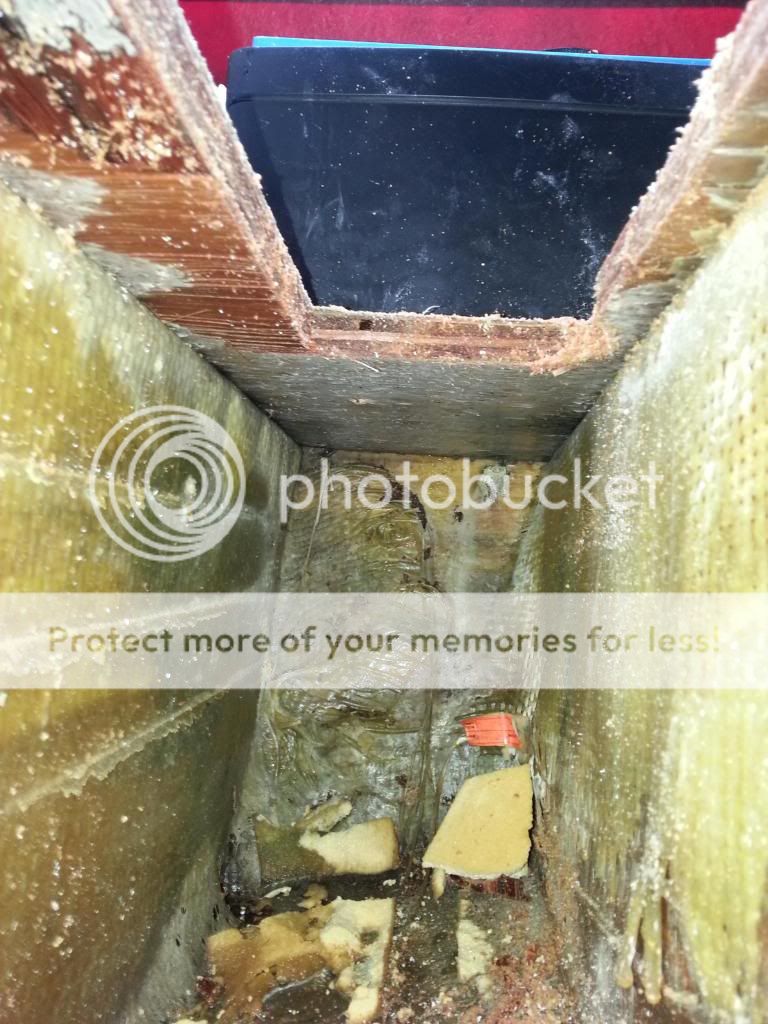
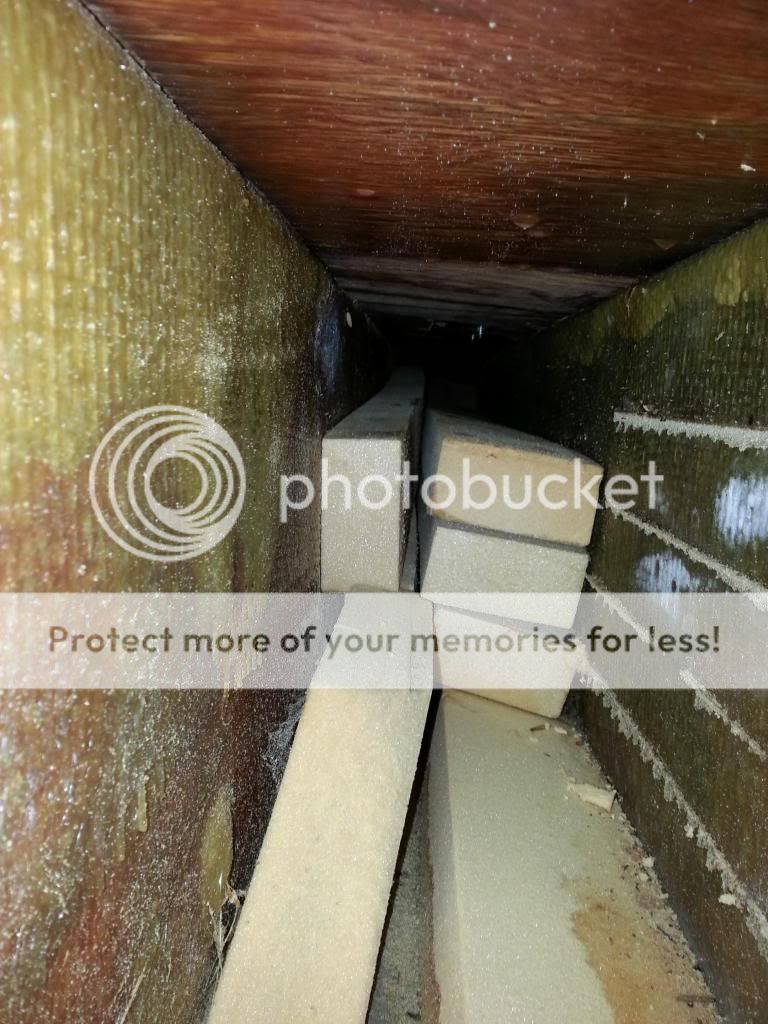
The section between the stringer and the hull is full of foam slices not poured in foam
This is good on one hand as it means hull cleanup will be easy but truly never met the intent as far a flotation foam regulations require.
I cut another opening in the floor at the aft end about 3ft from the transom.
Originally this had jump seats that we on either side of the dog house but the frames were toast so they were tossed.
20131012_165502_zps92162321.jpg

20131012_165535_zpse0fa995e.jpg

again more of this cheesy foam in here.
Good part it is again easy to clean up
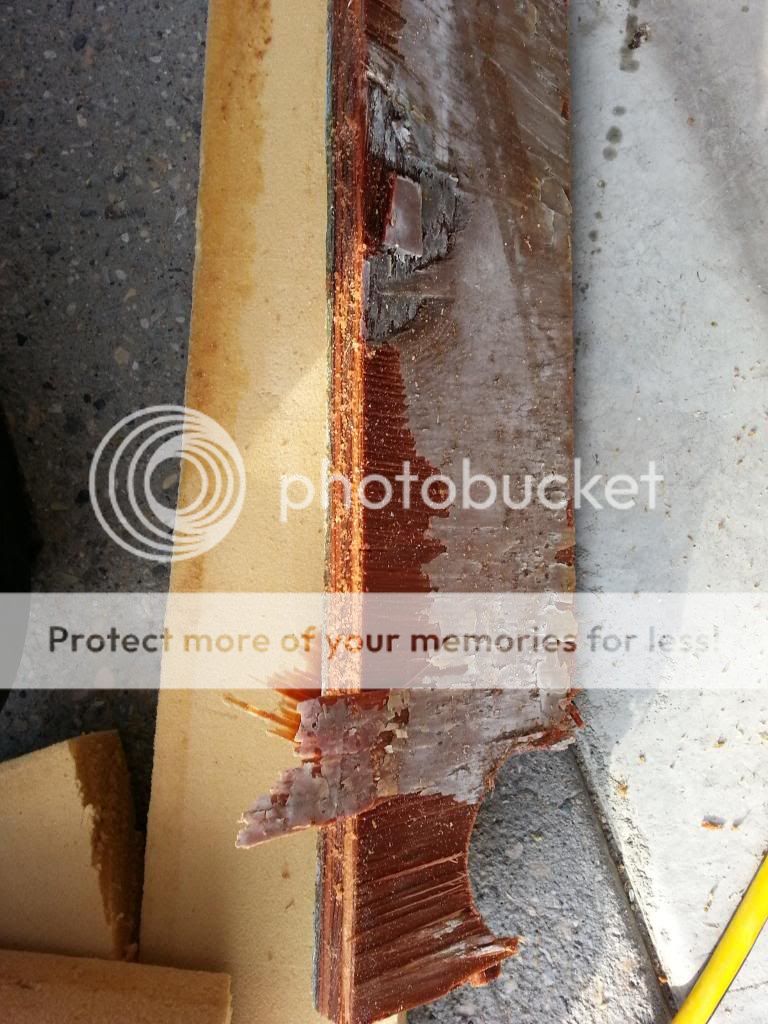
Bad part the deck is soaked .... dripping wet soaked. (and I keep the boat covered and as dry as I can )
20131012_165104_zpsa579fa7b.jpg

this is the section of deck removed.... weighs about 5 lbs
calculate square footage of floor X 5lbs for 2/3 cubic ft and possible deck weight equals almost 700 lbs if completely saturated
 

fishinfinn

Seaman Apprentice
Joined
Sep 11, 2013
Messages
43
Re: First boat 1989 Glassmast S187 cuddy restoration

Looking at the photos here and not on my phone I see the shoddy tie ins from the stringers to the hull .... air pockets appear to be prevalent here

Priced out epoxy from our local plastic shop.... 1400 for 3.75 gallons of it and the dont carry a biaxial cloth just a heavy roving and light cloth csm etc. I knew epoxy wasnt cheap but that is insane, Still my only opetion if I want to prep and be done by May Next year.

Did find a source for MDO... now to call and get $/availability from them.

Looked online for resin and found an epoxy for far less $ will investigate after the thanksgiving weekend is done.
Going to strip the boat interior cut some of the floor up and star cleaning so I can get a better idea of what I will be up against.
Asked for a multitool kit for XMAS so that will come in handy.
 

fishinfinn

Seaman Apprentice
Joined
Sep 11, 2013
Messages
43
Re: First boat 1989 Glassmast S187 cuddy restoration

20131012_165056_zps008e6348.jpg

some of the foam pulled out .... dry for the most part but soaked in others
20131012_171137_zps3f29ebf0.jpg

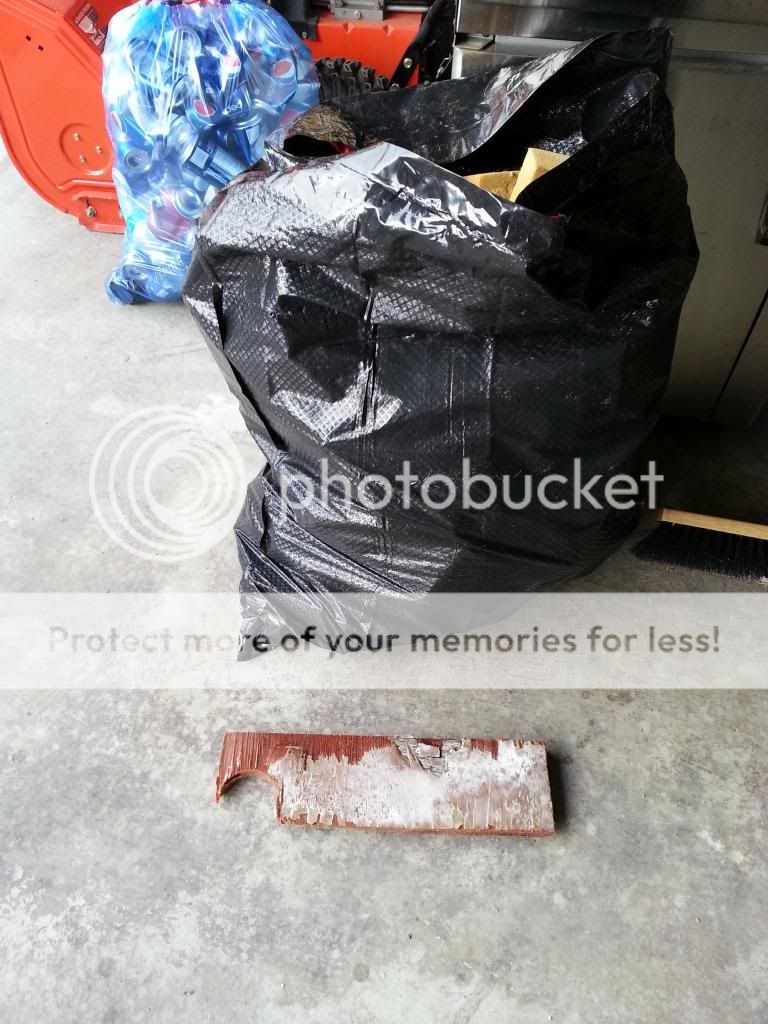
The black garbage bag full of cut op foam removed weighs as much as that little piece of plywood laying on the garage floor.
I have to start opening the rest of the floor up and get some heat / air movement to start drying it out a bit.
Seems damp for the most part but we will see .. more photos to come and tell the tale
20131012_165104_zpsa579fa7b.jpg

another shot of the small piece of floor removed..... very very wet
 

fishinfinn

Seaman Apprentice
Joined
Sep 11, 2013
Messages
43
Re: First boat 1989 Glassmast S187 cuddy restoration

must take measurements and record all of it for reference
I am curious about the main stringers in the hull as they dont apprear to run full length .... just up to the trasition in floor elevation as you step down to the cuddy.
as I cut out the floor though I will get a better idea of what is there and what I will have to do.
 

fishinfinn

Seaman Apprentice
Joined
Sep 11, 2013
Messages
43
Re: First boat 1989 Glassmast S187 cuddy restoration

these stringers are tall 12 to 16 inches high 3 sets of them
The floor panels so far are not even bonded to the stringers just tabbed into the hull ... and possible the center set of stringers
looks like they are shot too
but the depth of them allows for some possiblilties during the refit .... recessed battery boxes .....
The glass work here is not good to say it nicely
post some more pics later on
 

jigngrub

Fleet Admiral
Joined
Mar 19, 2011
Messages
8,155
Re: First boat 1989 Glassmast S187 cuddy restoration

Well, I've got to say I'm disappointed in that factory build.

Although the loose foam is good from a resto standpoint (easily removed), it's not something I would want in my boat. Not enough of it and too many voids. I'm not sure if there's enough foam in that boat to float a dingy properly.

Unsealed deck penetrations, exposure, carpeting, and your cool short summers are to blame for that saturated decking.

Had you waited a few more years you'd have had a steaming pile of rotten boat dung to remove, now it's mainly just wet and starting to rot. You did well by starting this resto now before everything went to hell in a handbag.
 

fishinfinn

Seaman Apprentice
Joined
Sep 11, 2013
Messages
43
Re: First boat 1989 Glassmast S187 cuddy restoration

I will continue to remove the above deck items .. 1 seat ... doghouse etc. today
Then the rest of the floor can be cut out to further this investigation.
Found a source for MDO plywood grade 1 and off grades available. Thank godd as nost of our box store lumber yards give ya a ddeer in the headlights look when you ask if the carry MDO.
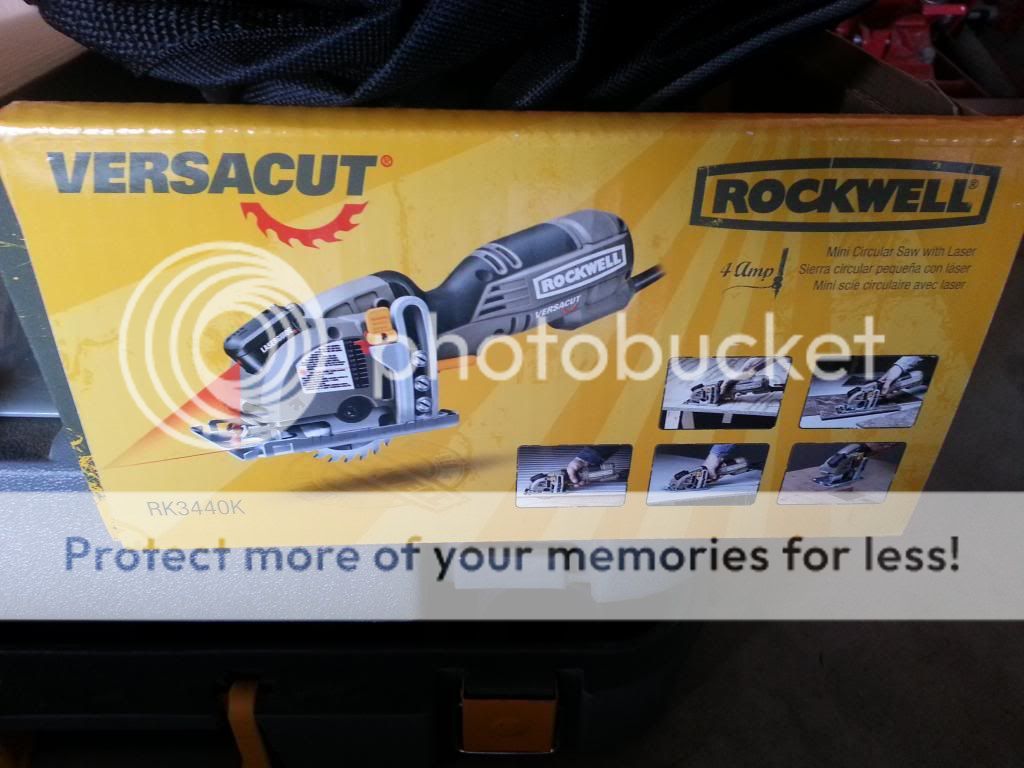
Bought this wicked little saw
20131013_155144_zps2b16602c.jpg

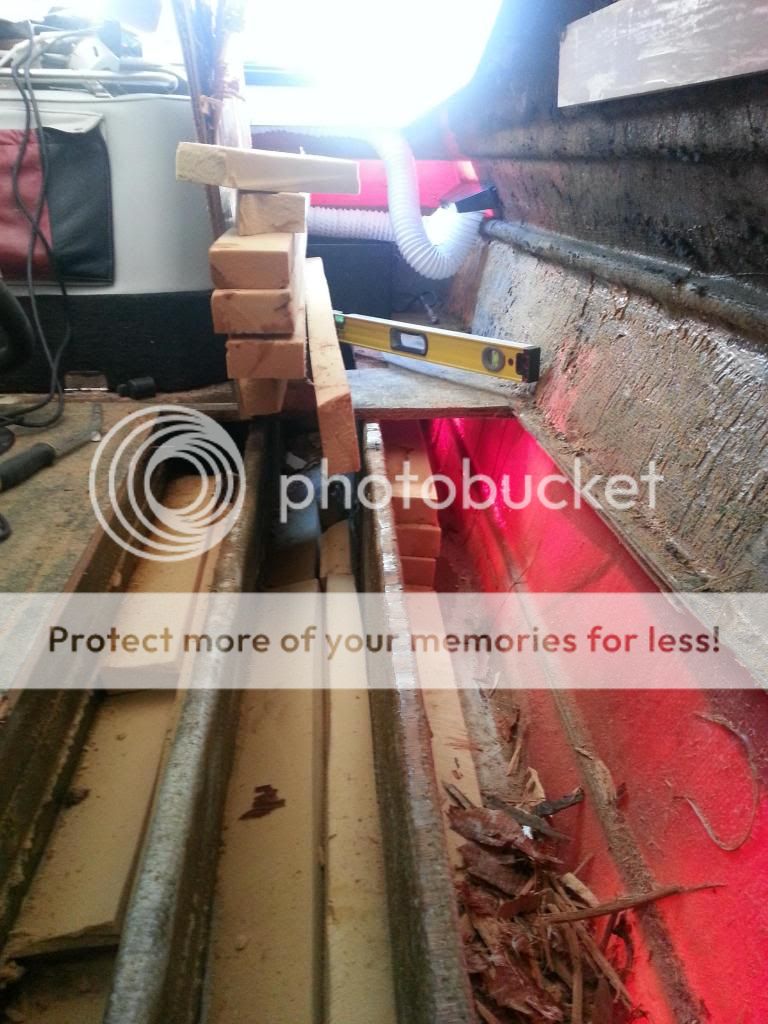
cuts close enough to the hull that the only thing left if the tabbin on the floor and just deep enough to get through
the glass and plywood.
20131013_140337_zpseb7faf24.jpg

the tabbing will be able to be cutt with a grinder and cutting disk in a slow methodical way
Little concerned about getting the old caked up carpet glue off though without using harsh chemicals that may destroy the
original poly surface in the hull.
There will be not carpet going back thats for sure. Stinky diry water absorbing stuff that is ...
 
Last edited:

fishinfinn

Seaman Apprentice
Joined
Sep 11, 2013
Messages
43
Re: First boat 1989 Glassmast S187 cuddy restoration

Jign I too am disappointed by what I found and what I will find ... and I did find more
The amount and type of foam is notsufficient for floation of a 2500 lb boat of that I am sure.
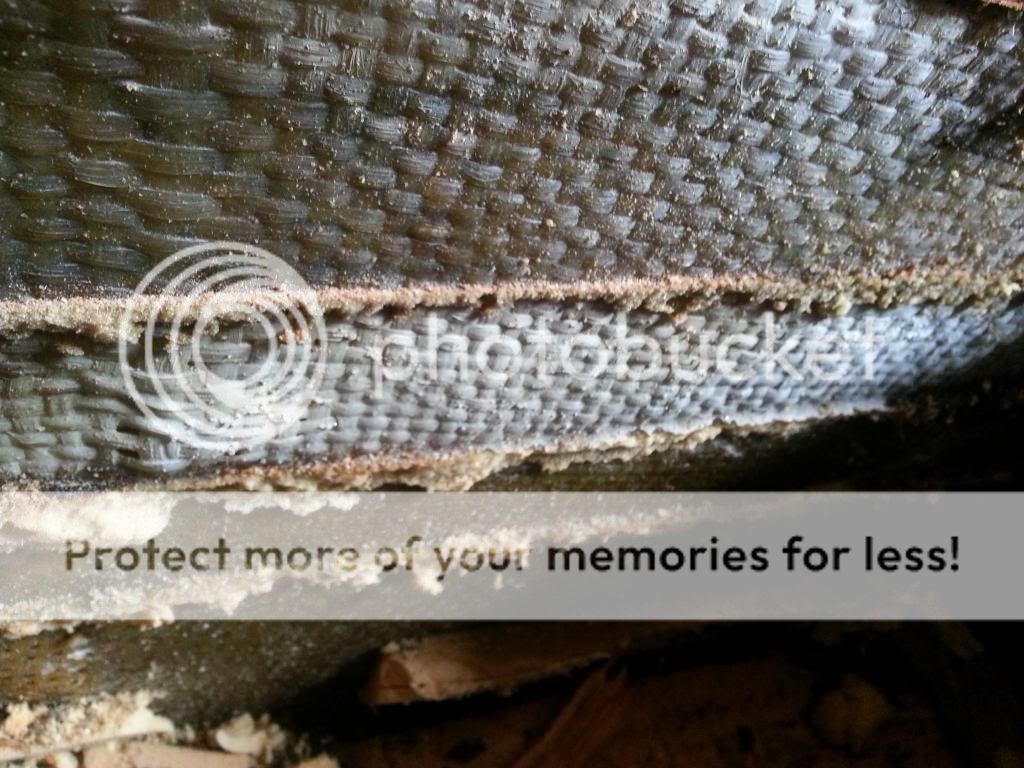
The stringers are poorly tabbed to the hull and very poorly glassed ... there are areas where the clother is not even fully wetted out.
20131013_1441260_zps67fb8c79.jpg

Heavy roving used here from what I see and even used on the caps of the ringers which were not bonded well either.
 
Top