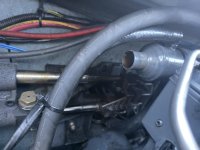
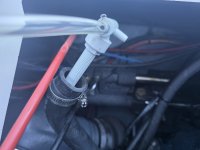
So the engine coolant circuit is holding pressure?
The other way water can get into oil is if the exhausts are leaking water into the engine via exhaust ports. If there's such as a problem the water can get past piston rings into oil but the water can also cause hydraulic lock of the engine cylinders (which can damage valves, piston rings, pistons, cause cracks, etc), dilute the oil film on cylinder bores (so cause rings to overheat and lose springiness / lack of compression), cause bore and piston scoring, cause excessive valve wear.
My engine didn't seem to have water in the oil but it did have a cracked exhaust allowing water into cylinders and suffered most of the above (but not cracks in the block or heads). I had to buy new exhausts, new valves, have the heads re-seated and skimmed, new pistons and rings, hone the hell out of cylinder bores to remove scratches. At least the crank, bearings and cam were still good but I did also put in new lifters and pushrods. Parts were cheap from RockAuto, did all the work myself except for the head work which I got a machine shop to do.
If the engine cooling system presssure test crept down over 5 or 10 minutes I'd be doing it again and making sure there were no leaks at the plug... Creaping down is exactly what would happen if there were a small leak.
Yes I would also be testing the manifolds. The worst thing that could happen is you go to the expense and effort of fixing up / rebuilding the engine (if engine problems are confirmed) but re-use manifolds that were leaking water into the engine thus breaking the rebuilt engine again... you'd still need new manifolds but would need to rebuild the engine a 2nd time.
I wouldn't order any engine parts until I knew exactly what was needed, though if the manifolds are strongly suspected I might order and maybe even fit them to see how it runs with them and see if the compression figures come up.
Something I meant to mention earlier, you said there was a bang.. If the bang wasn't transmission related it could be a backfire from the engine. It might backfire if the mixture gets extremely lean or if the igntion system fires a plug on a cylinder's compression stroke, the latter could possibly tie-in with the tacho suddenly reading higher than actual rpm.
If/while you've got the manifolds off it might be worth trying to look at the bores using a bore-scope through the spark plug holes, any scuffs on the bores (maybe from water diluting the oil film) might mean you'll need to pull the engine to rebuild it with a rebore or at least a hone anyway.
I think there's still a lot of diagnostic work to be done before you'll know what's causing the problems but water in oil, low compression readings, the tacho suddenly reading high with drop of power, the smell of rubber burning and the bang give you/us a lot to think about.
 . Unless I can figure out the issue and patch it up in a day lol.
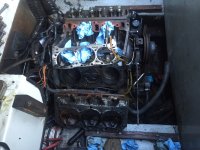
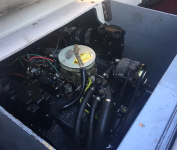
 forums.iboats.com

Okay a smoke machine will give me much more insight thenthe water jacket should hold 15psi forever
Video here
See the video link above. just bought this boat, guy assured me on God that all was good as I was bringing my 1.5 year old out.
I'm not sure what's happening. I'll be crusing along and all of a sudden the rpms on the gauge will rise, then the boat comes to a stop, rpms drop (I'm not touching the lever).
It'll also do the same thing if I give it full throttle. Also when taking off after it happens sometimes there's a faint bang.
Spun Coupler? Misaligned shift cable? Engine issue? I'm lost. How do I test.
Changed to old prop seller gave me, same issue. Drained drive, a bit of metallic on the plug but no shavings.
Not sure; these models are very different than the older ones like mine in that you have a ECM that runs the EFI, not sure if it also controls spark advance or not. This is why I’m not a fan of old EFI boat engines; when trouble starts you don’t have a starting point for diagnosis unless a modern scanner works with these 30 year old systems. Rather have a carb & stand alone distributor; much simpler & parts are actually available!
If you wind up being able to fix that Ford engine or find another I’d get rid of both the EFI system & that oddball distributor and install either a Holley or Edelbrock 4 bbl and an aftermarket electronic distributor. Learn how to clean and rebuild carbs and leave the problem of NLA unobtanium parts behind. Chasing that stuff is a huge waste of time!
Numbers improved!And that's a relatively straightforward swap? I'm very familiar with carbs. I fix and flip small engines on the side and 90% of them just need a carb clean. Have an ultrasound and cleaner and everything needed.
I know I'm getting ahead of myself here, should be able to recheck compression this afternoon after a two-day soak. Also got in a smoke tester and a leak down tester. Might pop the valve covers off to see if any valves are rusted and seized if the soap didn't work.