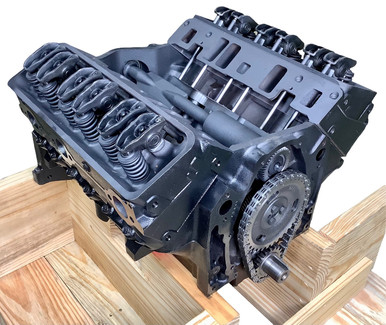
Milky oil

SeaRayboater95

Chief Petty Officer
Thread starter
Joined
May 30, 2009
Messages
602
I’m wondering why there’s like .010” difference in length? GM did so many odd things like mixing SAE & metric fittings it’s not surprising. I guess try to get the ones for the head you bought measure what you have & compare. Adjustment of preload might make up any difference. A machine shop guy or engine builder should know.
I went and measured the rods from the donor motor and they were .004 longer. That is likely wear and not an issue?
 

Lou C

Supreme Mariner
Joined
Nov 10, 2002
Messages
14,501
There's quite a bit of leeway in the hydraulic lifter preload adjustment, way more than the differences you are seeing. This is one reason why I prefer it to the non-adjustable set up they went to in the Vortecs.
Might also look inside the rocker arms and see how much wear there is in the pocket that the pushrod fits into.
 

Lou C

Supreme Mariner
Joined
Nov 10, 2002
Messages
14,501
OK just because I am curious I looked at the merc catalog at Marineengine where I get all of my OMC Cobra parts.
They break the Pre Vortec down into several year ranges
I compared yours 93-95 to the next one back in time (92-93) and basically all these parts are the same part numbers:
pushrods
lifters
rocker arms
rocker stud
btw, it is obscene what Merc charges for what are standard GM parts that they don't even MAKE!
not sure if this is the be all and end all, there are other parts sites as well.
 

Scott06

Fleet Admiral
Joined
Apr 20, 2014
Messages
7,614
I went and measured the rods from the donor motor and they were .004 longer. That is likely wear and not an issue?
Prob not wear just manufacturing tolerances. When you set preload on lifters normal you are compressing the lifter i Think .030-.050” so no issues as AD said.
 

SeaRayboater95

Chief Petty Officer
Thread starter
Joined
May 30, 2009
Messages
602
Prob not wear just manufacturing tolerances. When you set preload on lifters normal you are compressing the lifter i Think .030-.050” so no issues as AD said.
I believe these are just torque to 20 ft/lbs, unless I'm missing something. No adjustment. That's how I read the shop manual.
 

Lou C

Supreme Mariner
Joined
Nov 10, 2002
Messages
14,501
Nope that spec is the newer net lash (non adjustable) style. You have the older classic adjustable style. There's a whole procedure that you have to follow to get it right.
 

Lou C

Supreme Mariner
Joined
Nov 10, 2002
Messages
14,501
If you can't find a good resource, I can find the pages in my OMC shop manual that explains how to do it and post up a pic.
Suggestion:
take a marker and mark each valve retainer with a cylinder # and I for intake or E for exhaust. It makes it much easier to not make mistakes.
 

Lou C

Supreme Mariner
Joined
Nov 10, 2002
Messages
14,501
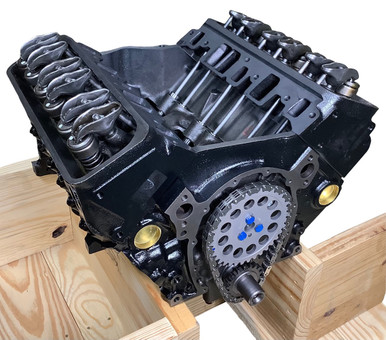
this is what you have, the adjustable valve train used on millions of Chevrolets, see the rocker arm that pivots on the stud, how tight you get the adjusting nut, determines the adjustment of the hydraulic lifter. This requires that you follow the GM procedure to set all 12 valves.

this is the later series, the Vortec, look at how the valve train is different, on these there is no provision for adjustment. This is the set up where you can simply torque the retainer to 20 ft lbs.

Most Chevy enthusiasts seem to prefer the older set up due to the adjustable nature of it, with the newer system if you get valvetrain noise, other than replacing parts there isn't much you can do.
 

SeaRayboater95

Chief Petty Officer
Thread starter
Joined
May 30, 2009
Messages
602
this is what you have, the adjustable valve train used on millions of Chevrolets, see the rocker arm that pivots on the stud, how tight you get the adjusting nut, determines the adjustment of the hydraulic lifter. This requires that you follow the GM procedure to set all 12 valves.

this is the later series, the Vortec, look at how the valve train is different, on these there is no provision for adjustment. This is the set up where you can simply torque the retainer to 20 ft lbs.

Most Chevy enthusiasts seem to prefer the older set up due to the adjustable nature of it, with the newer system if you get valvetrain noise, other than replacing parts there isn't much you can do.
Sounds like youre pretty sure. Not to question your knowledge, but the shop manual for the serial #, down loaded from this forum, says 20 ft/lbs. Don't know why this has to be so complicated and confusing.
 

Lou C

Supreme Mariner
Joined
Nov 10, 2002
Messages
14,501
This is a Merc shop manual right?
Does it have pix of what the valve train looks like?
 

Lou C

Supreme Mariner
Joined
Nov 10, 2002
Messages
14,501
Ya know what, I might be wrong
I saw that in the long post about all the changes that they made in the 4.3s, that Tonawanda changed to net lash (non-adjustable) in 92 or 93. If the stud that the rocker arm fits on has a collar that supports the rocker arm, it is the net lash style. So then that 20 ft lbs spec would be correct.
 

SeaRayboater95

Chief Petty Officer
Thread starter
Joined
May 30, 2009
Messages
602
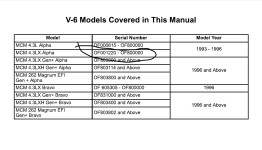
Figured out hoe to get pics from manual #18.my serial # is F769949
 

Attachments

  • v6 serial #.png
    v6 serial #.png
    81.4 KB · Views: 10
  • Rocker torque.png
    Rocker torque.png
    163.5 KB · Views: 10

SeaRayboater95

Chief Petty Officer
Thread starter
Joined
May 30, 2009
Messages
602
So can I assume that no response from you guys means 20ft/lbs is the correct torque on the valves?
 

Lou C

Supreme Mariner
Joined
Nov 10, 2002
Messages
14,501
If that’s what the FSM says then yes. One other resource would be a GM shop manual since it’s a GM engine. The only ones I’ve ever worked on are the adjustable valve train style. I’m guessing GM changed to this style because it takes less time on the assembly line. Who knows?
 

Scott06

Fleet Admiral
Joined
Apr 20, 2014
Messages
7,614
So can I assume that no response from you guys means 20ft/lbs is the correct torque on the valves?
I cannot confirm from here with 100% confidence but i think so.

Best way is to research your casting number to a 4.3 engine family generation. On a similar not adjustable valtrain (torque nut to set) I used poly locks to convert to adjustable due to milling the heads. This corrected a geometry issue I had due to similar mixing and matching of parts I had access to
 

Lou C

Supreme Mariner
Joined
Nov 10, 2002
Messages
14,501
The best way to determine if you have the adjustable valve train or the net lash (non-adjustable) valve train is to look at the stud that supports each rocker arm. The ones for the adjustable valve train are straight, no step (wider area) on them below the threads, whereas the ones for the net lash valve train have a step with a wider area right under where the threads for the retainer nut end.
With the pre-vortec engines it can be hard to tell because you don't see this until the rocker arms are removed. With the rocker arms removed it's obvious.
Even later 4.3s have roller bearings for the rocker arms, a further improvement.
 

nola mike

Admiral
Joined
Apr 22, 2009
Messages
6,090
The best way to determine if you have the adjustable valve train or the net lash (non-adjustable) valve train is to look at the stud that supports each rocker arm. The ones for the adjustable valve train are straight, no step (wider area) on them below the threads, whereas the ones for the net lash valve train have a step with a wider area right under where the threads for the retainer nut end.
With the pre-vortec engines it can be hard to tell because you don't see this until the rocker arms are removed. With the rocker arms removed it's obvious.
Even later 4.3s have roller bearings for the rocker arms, a further improvement.
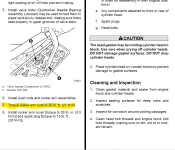
Well...I tried to double check. Manual #8 (looks like where your info came from) only shows that 20 ft lb. Manual #25 (newer models, but doesn't state s/n applicable for some reason) lists it as 22 ft lb. I'm not sure when the roller arm rockers came out (mine had them from an '01 blazer), so don't know if this is the discrepancy. Also, with the non-adjustable, there is a very distinct point when the nut bottoms out. I doubt that 20 vs 22 would make a huge difference at the end of the day, but for this kind of thing I'd want to make sure it was correct as well. Also, you had mentioned earlier about mixing up push rods. Both manuals specifically mention keeping them in order. That said, it will be less of an issue on a roller surface than on a flat surface.
 
Top