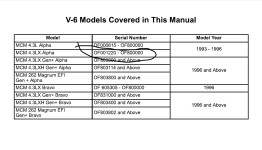
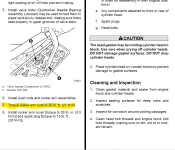
I went and measured the rods from the donor motor and they were .004 longer. That is likely wear and not an issue?I’m wondering why there’s like .010” difference in length? GM did so many odd things like mixing SAE & metric fittings it’s not surprising. I guess try to get the ones for the head you bought measure what you have & compare. Adjustment of preload might make up any difference. A machine shop guy or engine builder should know.

no worriesI went and measured the rods from the donor motor and they were .004 longer. That is likely wear and not an issue?


Prob not wear just manufacturing tolerances. When you set preload on lifters normal you are compressing the lifter i Think .030-.050” so no issues as AD said.I went and measured the rods from the donor motor and they were .004 longer. That is likely wear and not an issue?
I believe these are just torque to 20 ft/lbs, unless I'm missing something. No adjustment. That's how I read the shop manual.Prob not wear just manufacturing tolerances. When you set preload on lifters normal you are compressing the lifter i Think .030-.050” so no issues as AD said.
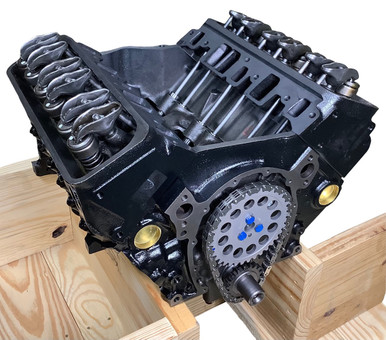
 michiganmotorz.com
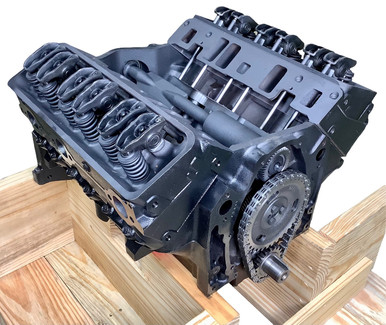 michiganmotorz.com
Sounds like youre pretty sure. Not to question your knowledge, but the shop manual for the serial #, down loaded from this forum, says 20 ft/lbs. Don't know why this has to be so complicated and confusing.this is what you have, the adjustable valve train used on millions of Chevrolets, see the rocker arm that pivots on the stud, how tight you get the adjusting nut, determines the adjustment of the hydraulic lifter. This requires that you follow the GM procedure to set all 12 valves.4.3L Marine Engine (1993-95)
1993-1995 4.3L remanufactured marine engine (one piece rear main seal, roller cam and roller lifters). This motor has been professionally remanufactured to meet or exceed GM OEM marine engine stock specifications.
this is the later series, the Vortec, look at how the valve train is different, on these there is no provision for adjustment. This is the set up where you can simply torque the retainer to 20 ft lbs.4.3L Vortec Marine Engine (1996-2007)
Michigan Motorz: your one-stop online shop for new & remanufactured marine engines, parts & accessories. Fast shipping, expert support worldwide.
Most Chevy enthusiasts seem to prefer the older set up due to the adjustable nature of it, with the newer system if you get valvetrain noise, other than replacing parts there isn't much you can do.
I cannot confirm from here with 100% confidence but i think so.So can I assume that no response from you guys means 20ft/lbs is the correct torque on the valves?

Well...I tried to double check. Manual #8 (looks like where your info came from) only shows that 20 ft lb. Manual #25 (newer models, but doesn't state s/n applicable for some reason) lists it as 22 ft lb. I'm not sure when the roller arm rockers came out (mine had them from an '01 blazer), so don't know if this is the discrepancy. Also, with the non-adjustable, there is a very distinct point when the nut bottoms out. I doubt that 20 vs 22 would make a huge difference at the end of the day, but for this kind of thing I'd want to make sure it was correct as well. Also, you had mentioned earlier about mixing up push rods. Both manuals specifically mention keeping them in order. That said, it will be less of an issue on a roller surface than on a flat surface.The best way to determine if you have the adjustable valve train or the net lash (non-adjustable) valve train is to look at the stud that supports each rocker arm. The ones for the adjustable valve train are straight, no step (wider area) on them below the threads, whereas the ones for the net lash valve train have a step with a wider area right under where the threads for the retainer nut end.
With the pre-vortec engines it can be hard to tell because you don't see this until the rocker arms are removed. With the rocker arms removed it's obvious.
Even later 4.3s have roller bearings for the rocker arms, a further improvement.