I/O (Sterndrive) Conversion to Outboards

tpenfield

Moderator
Staff member
Joined
Jul 18, 2011
Messages
19,056
Quick Update . . .

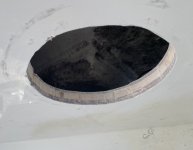
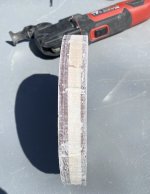
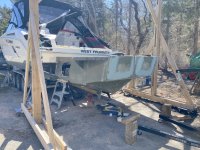
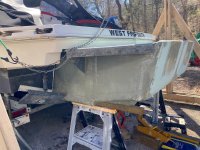
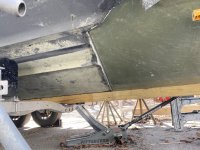
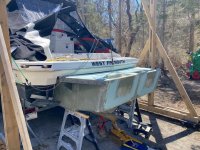
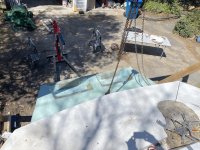
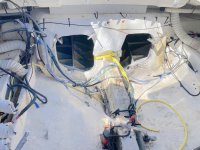
I had a feeling that the underside of the swim deck was fairly substantial in its construction . . .
.
It certainly is . . .
.
IMG_9410.JPG
.
IMG_9409.JPG
.
1.05" total thickness

0.33" Fiberglass
0.50" Balsa
0.22" Fiberglass

It has a wee bit more fiberglass than the transom :oops:
 

Scott Danforth

Grumpy Vintage Moderator still playing with boats
Staff member
Joined
Jul 23, 2011
Messages
52,267
Quick Update . . .

I had a feeling that the underside of the swim deck was fairly substantial in its construction . . .

1.05" total thickness

0.33" Fiberglass
0.50" Balsa
0.22" Fiberglass

It has a wee bit more fiberglass than the transom :oops:
similar over-build as my Rogue
 

tpenfield

Moderator
Staff member
Joined
Jul 18, 2011
Messages
19,056
Shouldn't you be using metric as an engineer
I still use imperial units of measure . . .

According to Google . . .
"While the U.S. has a policy to adopt the metric system (Metric Conversion Act of 1975) and federal agencies are required to use it, imperial units (customary units) persist in specific industries like civil construction and older infrastructure maintenance. Electrical engineering is almost entirely metric, while structural or automotive engineering in the U.S. may still use imperial units."

I do have a 'meter stick' (metric version of a yard stick) . . . All my tape measures are in feet/inches. FWIW - I use metric in my boat upholstery business.
 

Scott Danforth

Grumpy Vintage Moderator still playing with boats
Staff member
Joined
Jul 23, 2011
Messages
52,267
Unlike the Mars rover design team. most engineers use about 3 or 4 units of measure depending on the customer. And get the conversions correct.

I personally like furlongs per fortnight for velocity and cubits for length when in conversation just to throw people off. We also know that a parsec is a measure of distance, not time.

@tpenfield, one of the things I recommend where you cut the access holes in the deck and have exposed balsa is to cut the balsa back about 3/8" (or 10mm) and dress the edge with some fairing compound. it will keep the balsa from soaking up moisture and mold spores from the air and causing problems about 3-4 years down the road.

one of the things I have done is chuck up a 3mm / 1/8" allen key into the drill with the short leg cut down and sharpened on the grinder. a trim router with a top bearing works too.
 

flashback

Rear Admiral
Joined
Jun 28, 2002
Messages
4,279
I've also used the allen wrench trick when mounting hardware on a balsa core deck on my old sailboat, it works well.
 

tpenfield

Moderator
Staff member
Joined
Jul 18, 2011
Messages
19,056
The extension bracket needs a tweak . . .

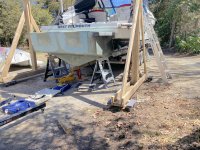
After much effort, the extension bracket would not come all the way flush with the boat's transom. I suspect that the bevel sides are a 'wee bit' thicker/wider than my original take-off from the transom, even though I made some accommodation for fiberglass thickness. It probably was not enough.

Anticipating such an occurrence, I figured that I could add a spacer, which would then let the extension bracket mount in a slightly wider space. It looks like I need about 5/8" (15-16mm). I have 1/2" and 1" Coosa board to work with. I'll see what adding a spacer does. (tomorrow's effort)
 

Scott Danforth

Grumpy Vintage Moderator still playing with boats
Staff member
Joined
Jul 23, 2011
Messages
52,267
With the taper, you probably are the gel thickness of the hull sides in the two areas port and starboard of the old out drive area
 

redneck joe

Supreme Mariner
Joined
Mar 18, 2009
Messages
14,680
Been busy with the new house and the current house getting ready to close and while I appreciate all the technical stuff (Ted are you not adding and bunk extenions?) I just would to insert my unit of measure math...

air:speed velocity unladen swallow


+5
The estimated airspeed velocity of an unladen European swallow is approximately 11 meters per second, which converts to roughly 24 miles per hour (or

). This figure is based on studies of bird flight mechanics, with typical cruising speeds often ranging between 8–14 m/s (roughly 20–30 mph).
style.org
style.org
+4
Key Findings:
European Swallow: The most commonly referenced, with a verified average speed of 11 m/s (24 mph).
African Swallow: Data is generally unknown for comparison.
Context: This is a famous question from Monty Python and the Holy Grail.
Measurement Basis: Calculated using the Strouhal number, which relates to flight efficiency (roughly 0.2 to 0.4).

Synonyms/Related Phrases:
Speed of a European swallow
Flying speed of a swallow
Cruising speed of a migratory bird
The answer often varies slightly depending on whether the swallow is considered to be in high-speed flight or a casual, efficient cruise

 

Scott Danforth

Grumpy Vintage Moderator still playing with boats
Staff member
Joined
Jul 23, 2011
Messages
52,267
I don't understand what you are saying :unsure:
You have two tapered surfaces coming together.

The 0.020-0.030" of gel on the hull is probably the issue.

I don't have the angles, but a simple bit of math would tell you how much interference on the sides are holding the extension off by 1/2"

Maybe check the flatness of the sides of the extension

I would grind the hull for better bonding the extension to the hull and knock the high spots off the sides of the extension
 
Top